

We’ve been walking the Camino at WAW since 2019, literally and figuratively. And we see that every year more people from around the world choose to walk the Camino de Santiago routes. Some are drawn by the history, others by the natural landscapes or the simplicity of life on the trail. For many, it’s a mix of personal challenge, cultural curiosity and a desire to disconnect from the fast pace of everyday life.
Stepping into 2026, the yearly statistics from the Pilgrim’s Office of the Camino for 2025 were published. Over half a million pilgrims finished the Camino: 530,919 people, to be specific. Imagine that basically the entire population of Edinburgh was walking the Camino in 2025!
The most popular route has been the Camino Francés, but over 100,000 people walked the central Camino Portugués and close to 90,000 the coastal Camino Portugués. We know it’s a close call as to which Portuguese route is best, and we’ve even written an article about the dilemma.
Some lesser-known routes are also gaining popularity, like the Camino Inglés, originally starting in England with a boat arriving in Ferrol, as well as the Camino Primitivo, also referred to as the Original Way.
And a number we are definitely here to increase: last year, 2,758 pilgrims walked the Camino de Invierno, our latest pilgrimage introduced in the collection of WAW adventures.
What makes the Camino de Santiago routes so special?
But what is behind the growing appeal of these ancient routes? In this article, we explore the emotional, cultural, and personal reasons that have turned the Camino into one of the most meaningful travel experiences of our time. Camino walking 2026, we are ready!
Growing global interest in Camino de Santiago routes
Camino de Santiago routes and pilgrimage are hot. The most famous pilgrimage in Europe is the Camino to Santiago de Compostela in Spain. In 1972, only 67 pilgrims were registered to walk the Camino de Santiago routes to Santiago de Compostela and complete the pilgrimage. And you’ve seen it above, in 2025 we passed half a million pilgrims.
Other lesser-known pilgrimages, such as the Via Francigena from Canterbury to Rome, are attracting more visitors while the Japanese Buddhist Shikoku pilgrimage has also seen a similar growth. Millions of Muslims go on Hajj, the pilgrimage to Mecca in Saudi Arabia which is one of the five pillars of Islam and something all Muslims who are physically and financially able are obliged to do (rising trend can also be seen there). Meanwhile, the Hindu Kumbh Mela in Northern India is described as the world’s largest human gathering.
The Cathedral of Santiago de Compostela
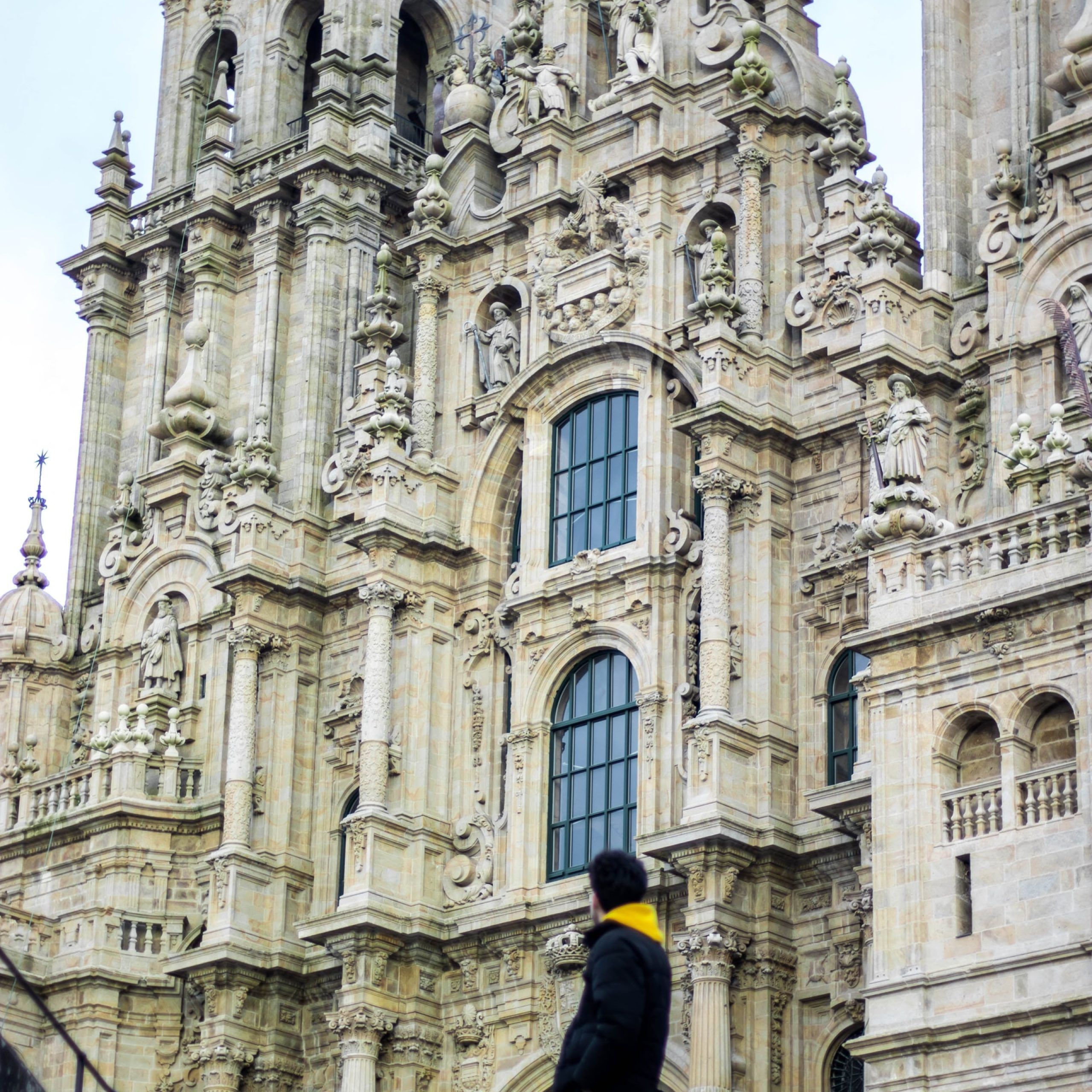
All Camino de Santiago routes lead to the Cathedral of Santiago de Compostela. When I got there for the first time, I felt a surge of emotions and, unexpectedly, I cried. For a few minutes, the pain in my feet and muscles seemed to disappear and the backpack on my back felt lighter. After 3 months and about 900 kilometres, I had just seen the cathedral of Santiago de Compostela for the first time. I had reached my destination and walked the last kilometres of my Camino de Santiago routes, following the Camino Francés of St. Jean Pied de Port.
Mount Joy
It turns out there is a term for my experience: “mount joy”. According to Dr. Guy Hayward, director of the British Pilgrimage Trust, the concept has already been described in medieval reports. “The first time pilgrims would see their final destination during their Camino de Santiago routes, they would normally be somewhere higher up, such as a hill overlooking the city” he said, explaining that pilgrims, after weeks or even months, would “weep for joy” from the excitement of finally reaching their goal, hence the term.
Spiritual or Secular?
Camino de Santiago routes to Santiago de Compostela today could be seen as a specifically religious form of travel. But even in the past, being on the road was just as important as spirituality.
In many ways, Camino de Santiago routes were the forerunner of modern tourism. In the old days, if you wanted to see the world, visiting a sacred site was one of the few reasons you got to travel. As pilgrimage places became popular, a whole host of infrastructure would grow around them – from souvenir shops to guidebooks.
COVID-19
The COVID-19 outbreak severely curtailed pilgrimages in 2020 and 2021. Since then, numbers have not only recovered but continue to grow steadily, a trend that remains clearly visible heading into 2026.
What is it about the Camino de Santiago routes and this way of travelling that continues to attract so many people?
We think the answer is clear: Camino de Santiago routes offer a form of travel that feels safe, flexible, and grounded, with open-air days, a personal rhythm, and natural opportunities for social distancing.
A journey through changing landscapes
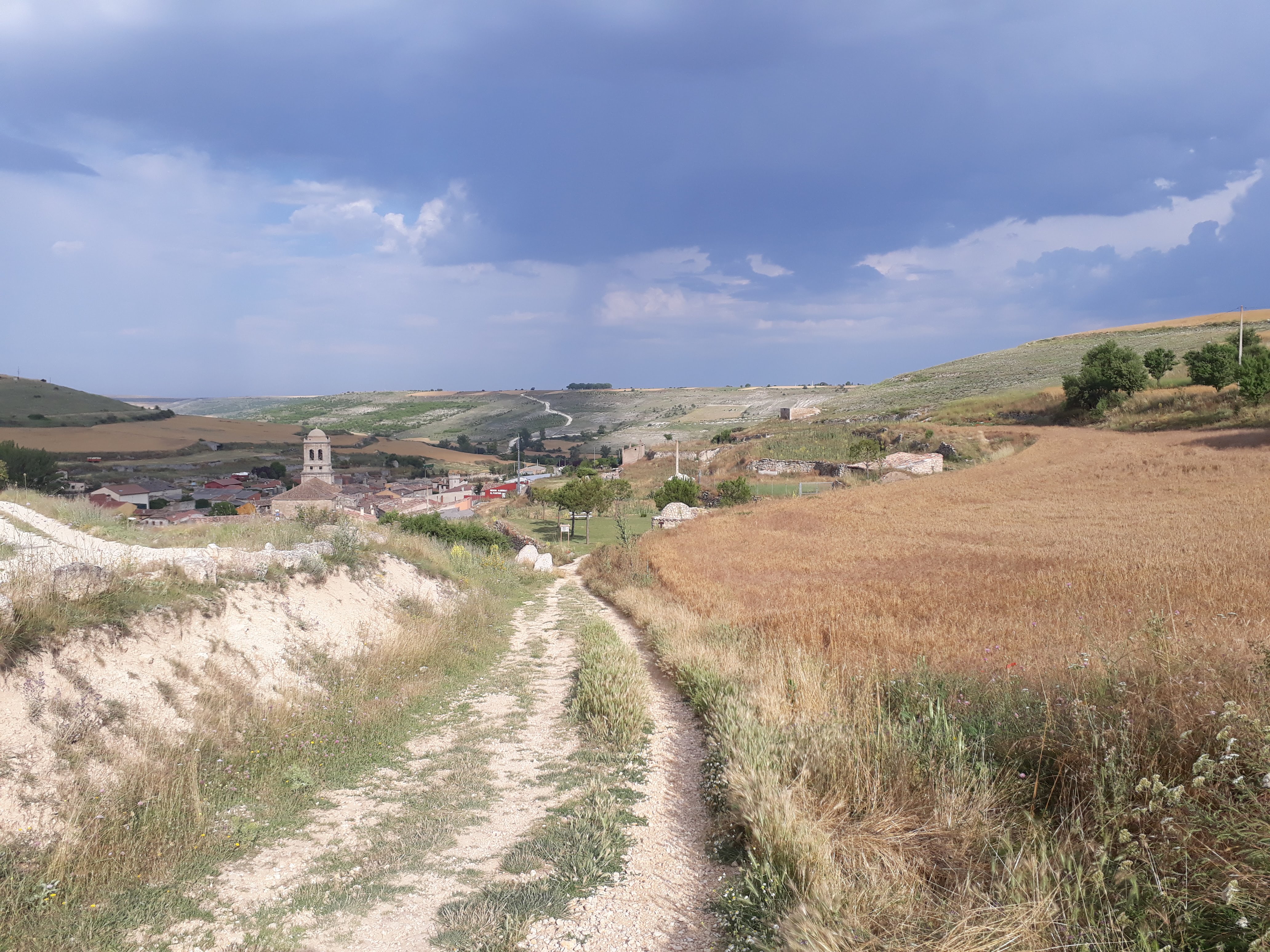
As a form of travel, walking Camino de Santiago routes was unlike anything I had done before. Walking for three months, every day. And yes, sometimes I thought, “What have I started?”, but I gained a lot from the experience. It suddenly made the world more human in a way that an airplane, train, or car travel never can. I saw landscapes around me gradually change, something you can’t see from a train window or even on a bike.
The power of simplicity on the Camino
Walking the Camino de Santiago routes also made everything easier. I really had nothing to think about, unless to put one foot in front of the other and decide what to eat for lunch. Moreover, I had never enjoyed nature so much. When you spend several days in a row in nature, you start to feel different. But why a pilgrimage? After all, you can feel connected to nature everywhere.
In my view, “normal” walking holidays are about looking for some of the same things, but pilgrims who walk or bike Camino de Santiago routes may be more consciously looking for something deeper. Professor Reader, who has studied pilgrimages around the world, says that in many cultures, people feel they need a “good” reason to travel. They want to feel that they are not just going somewhere for fun, but that there is some deeper or legitimate reason to go on vacation; for many people, becoming a pilgrim is such a reason.
More about the Camino de Santiago routes to Santiago de Compostela
The pilgrimage to Santiago de Compostela got a kickstart under Franco, the dictator of Spain until 1975, who started promoting the Camino by linking it to his ideology of “muscular Spanish Catholic nationalism”. After the death of Franco and the integration of Spain into the European community, the pilgrimage was gradually seen as an expression of a shared European identity.
For some, embracing the statue of the apostle Saint James in Santiago de Compostela is a form of liberation and the beginning of a new life. For others, the pilgrimage is a sporting challenge. Regardless of the motivation, the pilgrimage route has a lot of meaning for everyone, and only those who have taken up this challenge can truly speak about it.
Looking ahead to Camino walking 2026, decades after their revival, the Camino de Santiago routes remain as relevant as ever, shaped by history but constantly reinterpreted by each new generation of pilgrims.
Do you also want to walk or bike the Camino de Santiago routes to make a pilgrimage to Santiago de Compostela? We can offer different travel solutions and design them just for you to go walking! Think of the Camino Frances or the Camino Portugués. You can also start your Camino in Santiago de Compostela and walk to Finisterre and Muxia.
Contact us and we will be happy to help you join this amazing adventure! Write an email to [email protected] or follow us on our social profiles for constant news and updates on our Instagram and Facebook accounts.

Comment (0)