

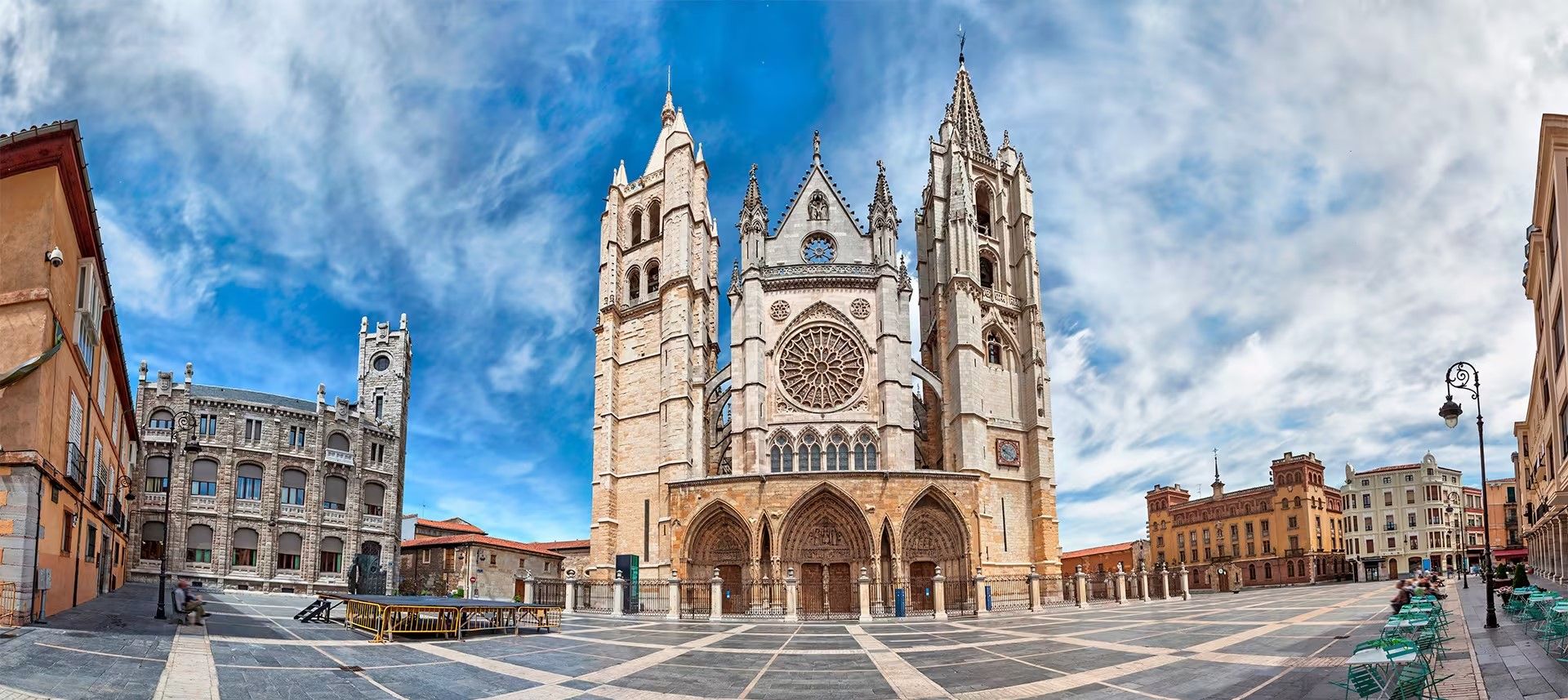
What is the Camino de Santiago de Compostela?
The Camino de Santiago de Compostela is one of the most famous pilgrimage journeys in the world, but it is not actually a single trail. It is a network of historic routes that cross Spain, Portugal, France and other parts of Europe, traditionally leading pilgrims towards Santiago de Compostela in Galicia, northwestern Spain.
For centuries, people have travelled these paths for religious reasons. Today, however, walking to Santiago de Compostela attracts people with very different motivations: spirituality, culture, nature, personal reflection, physical challenge or simply the desire to experience a different way of travelling.
Whether you walk for a few days or spend several weeks on the trail, the Camino is about much more than reaching Santiago. For many pilgrims, the journey itself, the people they meet and the simplicity of everyday life become the most memorable parts of the experience.
If you are considering your own walk to Santiago Spain, understanding what the Camino is, where it comes from and which routes you can follow is a good place to begin.
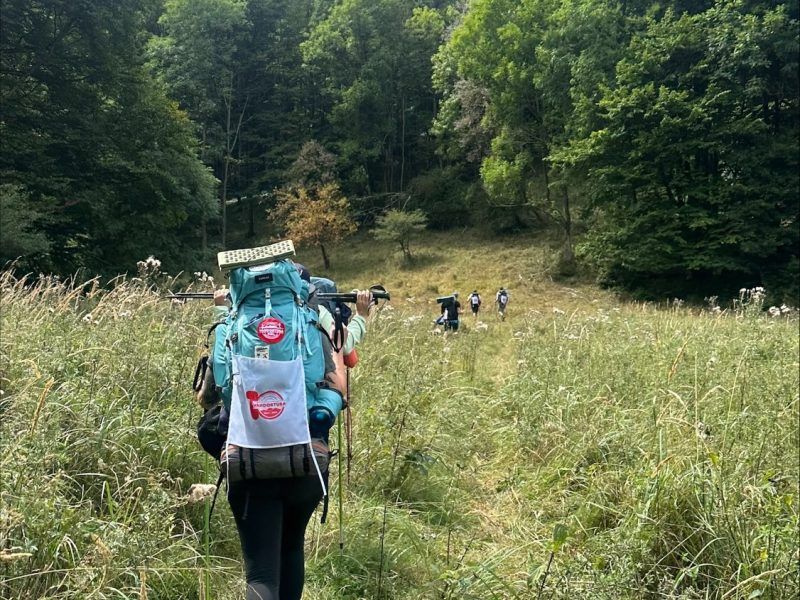
What is the Camino de Santiago?
The Camino de Santiago, also known as the Way of St James, is a historic network of pilgrimage routes leading towards Santiago de Compostela.
According to Christian tradition, the remains of the apostle St James are associated with the Cathedral of Santiago de Compostela. This connection transformed the city into one of the most important pilgrimage destinations in medieval Europe.
Over time, different routes developed across the continent as pilgrims travelled towards Galicia. That is why there is no single Camino de Santiago and no compulsory starting point. You can begin hundreds of kilometres away, walk a short section or combine different stages according to the time and experience you are looking for.
Today, most pilgrims complete the journey on foot, although cycling is another popular way of travelling the Camino.
If you are not yet sure which itinerary suits you best, our guide to the Camino de Santiago routes offers an overview of the main alternatives.
Where is the Camino de Santiago?
All the traditional routes ultimately lead towards Santiago de Compostela, the capital of Galicia in northwestern Spain.
The city is therefore the shared destination, but the Camino stretches far beyond Galicia. Routes approach Santiago from Spain, Portugal and France, while the wider European pilgrimage tradition reaches much further.
This variety means that walking to Santiago de Compostela can look completely different depending on the Camino you choose. One route might take you through mountain landscapes and quiet rural villages, while another follows coastal scenery, vineyards, historic towns or wide agricultural plains.
There is also no single official starting point. Some pilgrims undertake a journey lasting more than a month, while others choose the final stages into Santiago.
You can explore the different possibilities available in Spain through our Camino de Santiago routes in Spain.
Why do people walk to Santiago de Compostela?
There is no single reason why someone decides to make a walk to Santiago Spain.
Historically, pilgrimage was closely connected with Christian faith. Religion remains important for some walkers today, but the modern Camino brings together people with many different motivations.
Research developed by the Faculty of Economics of the University of Santiago de Compostela explored the motivations and experiences of more than 1,500 pilgrims, together with hundreds of people preparing for their own Camino.
The findings illustrate just how personal the experience can be.
Spiritual and personal reasons
Spirituality was the most frequently mentioned motivation in the study, identified by 67.9% of respondents.
That does not necessarily mean belonging to a particular religion. For many pilgrims, spirituality is associated with creating space to think, disconnecting from everyday routines or reflecting on a particular stage of life.
The daily rhythm of the Camino can help create that space. Days often become surprisingly simple: wake up, prepare your backpack, walk, eat, rest and continue towards the next destination.
Without many of the distractions of ordinary life, long hours on the trail can become an opportunity for reflection.
Culture, nature and the physical challenge
Other motivations are much more closely connected with travel and outdoor activity.
In the same research, 42.4% of participants mentioned recreation and relaxation, 40.4% referred to cultural reasons and 34.3% highlighted sport and outdoor leisure.
The Camino combines all of these elements naturally.
During the journey, you can pass medieval villages, churches, historic bridges, vineyards, forests, mountains and cities. Travelling on foot also creates a very different relationship with the landscape. Instead of moving rapidly from attraction to attraction, you experience the distance between places step by step.
For many walkers, completing a challenging itinerary is also an important personal achievement.
What pilgrims say they gain from the Camino
The effects of the experience do not necessarily stop when pilgrims arrive in Santiago.
According to the same study, 44.4% of respondents reported returning home with renewed energy and a different perspective on their lives. Another 27.3% considered the pilgrimage a transformative experience and felt that they would not be exactly the same afterwards.
Some pilgrims also described experiencing spirituality more deeply, while others highlighted the international community created along the route.
This may explain why many people later return to walk another Camino, help future pilgrims or continue to feel connected with the journey long after reaching Santiago.
A brief history of the Camino de Santiago de Compostela
The origins of the Camino are traditionally linked to the discovery in the early ninth century of a tomb believed to contain the remains of St James.
As Santiago de Compostela became an important Christian pilgrimage destination, travellers began arriving from many different parts of Europe. Roads, bridges, religious buildings, hospitals and settlements developed along the routes used by pilgrims.
During the Middle Ages, the pilgrimage became one of the great Christian journeys of Europe, alongside Rome and Jerusalem.
Its popularity was not constant. Wars, epidemics and political changes affected the number of people travelling towards Santiago, and by the twentieth century the Camino attracted far fewer pilgrims than it does today.
Interest began to grow again during the second half of the twentieth century. Since then, the Camino has evolved into an international walking experience where ancient pilgrimage traditions exist alongside cultural tourism, hiking and personal exploration.
Why is the scallop shell the symbol of the Camino?
The scallop shell is one of the most recognisable symbols associated with the Camino de Santiago.
Its origins are connected with different legends and traditions, so it is difficult to reduce its meaning to a single story. Historically, however, scallop shells became associated with pilgrims travelling to and from Galicia.
Over the centuries, the shell became closely linked with the pilgrimage itself.
Today, you will see it throughout the Camino. It appears on signs, milestones and markers indicating the direction towards Santiago, and many pilgrims attach a shell to their backpack as a symbol of the journey.
The shell has therefore become both a practical wayfinding symbol and an emblem of the shared Camino experience.
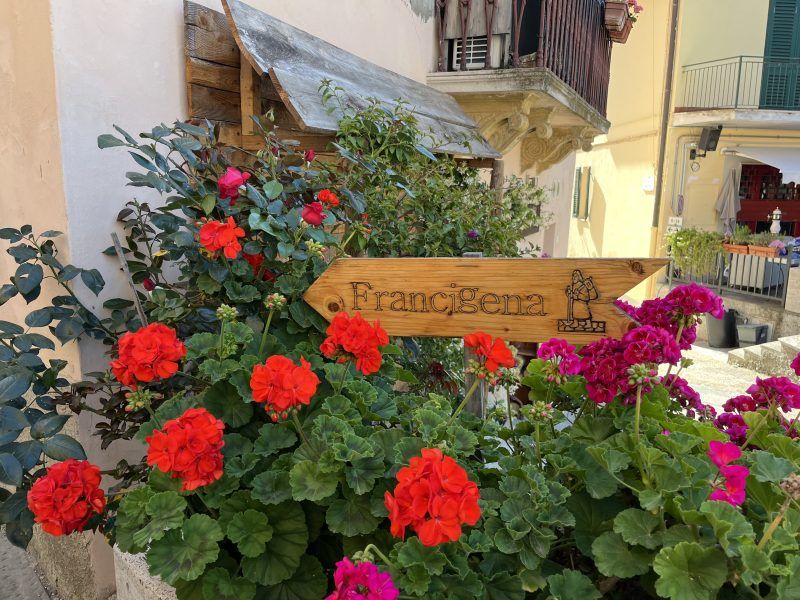
What are the main Camino de Santiago routes?
There are many ways of walking to Santiago de Compostela, and choosing a route is one of the most important decisions when planning your pilgrimage.
Some Caminos are highly social and have extensive pilgrim infrastructure. Others are quieter, more mountainous or physically demanding. There are also coastal alternatives for travellers who prefer sea views to inland landscapes.
These are some of the best-known routes.
Camino Francés
The Camino Francés is the best-known Camino route and one of the most popular choices for first-time pilgrims.
It traditionally starts in Saint-Jean-Pied-de-Port in France, crosses the Pyrenees and continues west through northern Spain before reaching Santiago de Compostela.
Along the way, pilgrims pass places such as Pamplona, Burgos and León, as well as some of the landscapes and monuments most closely associated with the Camino.
Its popularity also means there is a well-developed network of accommodation, restaurants and other services for pilgrims.
Camino Portugués
The Camino Portugués approaches Santiago from Portugal and has become one of the most popular alternatives to the Camino Francés.
Long-distance pilgrims can start in Lisbon, while Porto is another common starting point for shorter journeys.
There are several ways to travel north. The Camino Portugués Coastal Route combines historic towns with stretches close to the Atlantic Ocean before entering Galicia.
Another alternative is the Camino Espiritual, a distinctive variation that adds a different landscape and pilgrimage experience to the Portuguese Way.
Camino del Norte
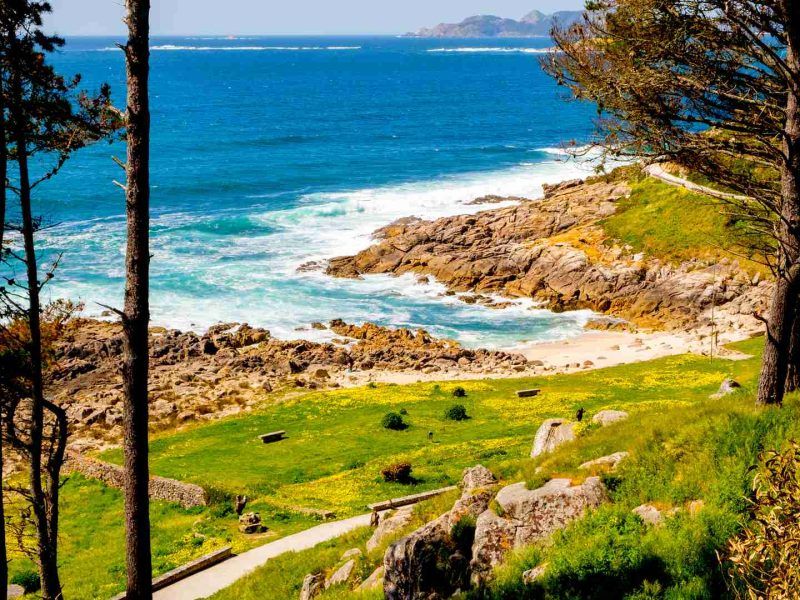
The Camino del Norte follows much of Spain’s northern coastline.
It begins close to the French border in the Basque Country and continues west through northern Spain before eventually entering Galicia and turning towards Santiago.
The route is known for green landscapes, coastal scenery and a more demanding profile than some sections of the Camino Francés.
It can be an excellent option for walkers attracted by northern Spain and those who prefer a route that combines the sea, hills, countryside and historic cities.
Camino Primitivo
The Camino Primitivo is generally considered the oldest recorded pilgrimage route to Santiago.
Traditionally beginning in Oviedo, it crosses the mountainous landscapes of Asturias before continuing through Galicia and eventually joining other Camino paths.
Its steep terrain makes it more physically demanding than many other popular routes. At the same time, its mountain landscapes and quieter stretches make it particularly rewarding for experienced walkers looking for a more challenging journey.
Camino Finisterre and Muxía
The Camino Finisterre is unusual because it traditionally begins in Santiago rather than ending there.
After reaching Santiago de Compostela, pilgrims can continue west towards the Atlantic coast and Cape Finisterre, historically associated with the idea of the “end of the world”.
Some walkers extend the journey towards Muxía, creating a memorable final stage along the Galician coast.
If reaching Santiago does not feel like the end of your journey, our Camino Finisterre walking itinerary allows you to continue beyond the city and finish beside the Atlantic.
How long does it take to walk the Camino de Santiago?
There is no fixed duration for the Camino because the experience can be adapted to the amount of time you have available.
Walking an entire long-distance route can take several weeks. Completing the Camino Francés from its traditional starting point, for example, usually requires around a month or more depending on your daily distances, rest days and walking pace.
But there is no requirement to complete an entire route.
Many pilgrims choose a section that fits into one or two weeks. Others return over several years and complete the same Camino in different stages.
This flexibility is one of the strengths of the pilgrimage. Your walk to Santiago Spain can be a short first experience or a much longer journey across several regions.
The right distance depends on your fitness, previous walking experience, available time and what you hope to get from the Camino.
Do you have to be religious to walk the Camino?
No. You do not need to be religious to walk the Camino de Santiago.
Its origins are Christian and religious pilgrimage remains an important part of its identity, but modern pilgrims come from many different backgrounds and belief systems.
Some people walk because of faith. Others are seeking personal reflection, outdoor adventure, cultural discovery or a physical challenge.
You may also begin the Camino without a very clear reason.
One of the distinctive aspects of walking to Santiago de Compostela is that people with different motivations share the same path. On any given day, you might walk alongside pilgrims of different ages, nationalities and beliefs who have completely different reasons for being there.
That diversity has become part of the modern Camino experience.
What is daily life like when walking to Santiago?
Life on the Camino often feels much simpler than normal daily life.
A typical day begins early. Pilgrims prepare their bags, have breakfast and start walking towards the next village or town. Depending on the itinerary, a stage may take several hours and include long periods through countryside, forests or small settlements.
The pace naturally slows down.
Instead of planning an entire day around meetings, transport or screens, your main concerns become practical: where to stop for coffee, how your feet feel, what the weather is doing and how far you want to walk.
You also repeatedly meet other pilgrims. Sometimes you walk together for several stages; sometimes you share only a conversation over breakfast before continuing in different directions.
These small interactions are one of the reasons many people describe the Camino as a social experience even when they begin the journey alone.
What happens when you reach Santiago de Compostela?
For most pilgrims, arriving in Santiago is an emotional moment.
After days or weeks of travelling on foot, the historic streets of the city eventually lead towards Praza do Obradoiro and the Cathedral of Santiago de Compostela.
For some people, reaching the square is a moment of celebration. Others prefer to sit quietly and absorb the fact that the journey is finished. It is also common to encounter people you met earlier on the trail and believed you might never see again.
Pilgrims may attend the Pilgrim’s Mass or spend time exploring Santiago before returning home.
Depending on the distance walked and the conditions under which the pilgrimage was completed, pilgrims may also be eligible to request the Compostela, the traditional certificate associated with completing the Camino.
For others, however, Santiago is not quite the end. Continuing towards Finisterre or Muxía can add several more days of walking and create a gradual transition between the Camino and the journey home.
Does walking the Camino change you?
There is no guarantee that completing the Camino will completely transform your life, but many pilgrims say that the experience changes how they look at everyday things.
The research into pilgrim motivations mentioned earlier supports this idea. A significant proportion of respondents reported returning home with renewed energy, a different outlook or a feeling that the experience had changed them personally.
Why can something as simple as walking have such a strong effect?
Part of the answer may lie in the contrast between life on the Camino and life at home.
Learning to appreciate simplicity
During the Camino, everything you need for several days or weeks is usually carried in a backpack.
That experience can change how you think about possessions and convenience. Life becomes centred around simple things: comfortable shoes, food, water, rest, conversation and reaching the next destination.
After returning home, some pilgrims try to maintain part of that simplicity by paying more attention to what genuinely adds value to their lives.
Finding space for reflection
Walking creates long periods without many of the distractions that fill normal days.
Some pilgrims use this time intentionally to think about decisions, relationships or personal changes. Others simply allow their thoughts to wander while concentrating on the landscape and the rhythm of walking.
That mental space is one reason walking to Santiago de Compostela can feel very different from a conventional holiday.
Discovering the Camino community
The Camino also creates connections between people who might never have met in ordinary life.
You may share a meal with someone from another country, walk several kilometres with a stranger or repeatedly encounter the same group of pilgrims over different stages.
The relationships are often temporary, but that does not necessarily make them less meaningful.
For some walkers, the sense of community becomes one of the strongest memories of their pilgrimage.
How can you keep the Camino spirit alive?
Reaching Santiago does not mean that everything you experienced on the trail has to disappear as soon as you return home.
Many former pilgrims speak about maintaining the “Camino spirit”: carrying some of the habits, perspectives and values they discovered while walking into normal life.
Keep walking and stay active
One of the simplest ways to stay connected with the experience is to continue walking.
You do not need to cover twenty kilometres every day. Regular walks, hikes or other outdoor activities can recreate some of the physical and mental benefits you experienced during the pilgrimage.
Make time for silence
The Camino often provides more quiet time than everyday life.
After returning home, deliberately creating moments without constant notifications, entertainment or other distractions can help you preserve some of that reflective space.
Talking about the Camino with friends, family or other pilgrims can help you process what the journey meant to you.
Your experience may also be useful to someone preparing for their first Camino. Practical advice about packing, daily distances, difficult moments or unexpected highlights can make a future pilgrim feel more prepared.
Plan another Camino
For many pilgrims, arriving in Santiago creates a new problem: deciding which Camino to walk next.
The routes are different enough that returning does not necessarily mean repeating the same experience. Someone who first walked the Camino Francés might later choose the northern coast, the Camino Portugués or the Camino Primitivo.
Others decide to continue beyond Santiago towards Finisterre.
There is always another landscape, route or perspective to discover.
How do you choose the right Camino route?
The best Camino depends on what you want from the experience.
If this is your first long-distance pilgrimage and you value plenty of services and opportunities to meet other walkers, the Camino Francés is often a natural starting point.
If coastal landscapes are important to you, the Camino Portugués Coastal Route or the Camino del Norte may be more appealing.
Experienced hikers looking for a more physically demanding route might prefer the Camino Primitivo.
Your available time also matters. You do not need several weeks to experience the Camino. Choosing a shorter section or organised itinerary can allow you to experience the pilgrimage within a limited holiday period.
Before deciding, compare the landscapes, distances, elevation, expected weather and infrastructure of the different Camino de Santiago routes.
Ready for your own walk to Santiago Spain?
There is no correct reason to walk the Camino and no single way to experience it.
You might be looking for a physical challenge, time to think, beautiful landscapes, cultural encounters or an adventure that feels completely different from an ordinary holiday.
You can follow the famous Camino Francés, approach Galicia from Portugal, walk beside the northern coast or continue beyond Santiago towards Finisterre.
And you do not need to know exactly what the Camino will mean to you before you start.
That is part of its appeal.
For centuries, people have travelled towards Santiago with different backgrounds, expectations and motivations. The routes have changed, the infrastructure has evolved and today’s pilgrims are much more diverse than those of the Middle Ages, but one fundamental part of the experience remains the same: progress is made one step at a time.
For many travellers, walking to Santiago de Compostela begins as a hiking trip or pilgrimage and becomes something more personal along the way.
Explore our Camino de Santiago routes and find the journey that best fits the experience you are looking for.
Buen Camino!

Comment (0)