

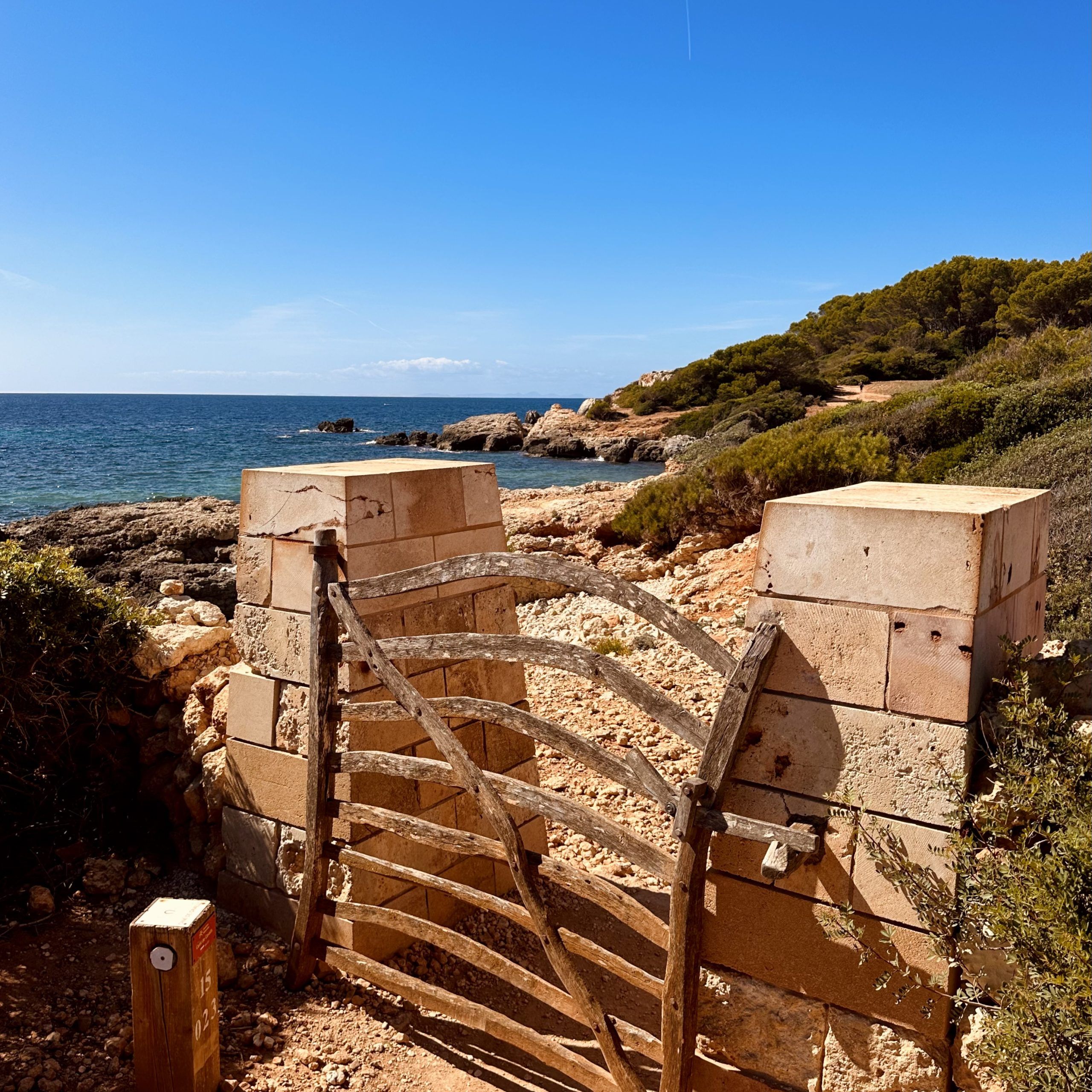
About taste there is no arguing. But when it comes to the island of Menorca, there is one question we hear again and again: which part is more beautiful for walking, the north or the south?
The answer is not as simple as it might seem. Although Menorca is a relatively small Mediterranean island, its two coastlines offer surprisingly different landscapes and walking experiences. The south is famous for its white-sand coves, turquoise waters and Mediterranean forests, while the north feels wilder, more remote and dramatically rugged.
So, which side of the island of Menorca should you choose for your walking holiday? In this guide, we compare the north and south, explain what makes each one special and help you decide which section of the Camí de Cavalls suits you best. And if you still cannot choose, there is always a third option: walk both.
About the island of Menorca
First of all, it is worth knowing a little more about the island of Menorca. Located in the Mediterranean Sea, Menorca has around 216 km of coastline. It is approximately 47 km long and between 10 and 19 km wide. Together with Mallorca, Ibiza and Formentera, Menorca forms part of the Balearic Islands, off the eastern coast of mainland Spain.
Its name comes from the Latin Insula Minor, meaning “smaller island”, in reference to neighbouring Mallorca. But its smaller size certainly does not mean there is less to discover. Menorca combines beaches, forests, cliffs, farmland, traditional villages and prehistoric heritage within a remarkably compact area.
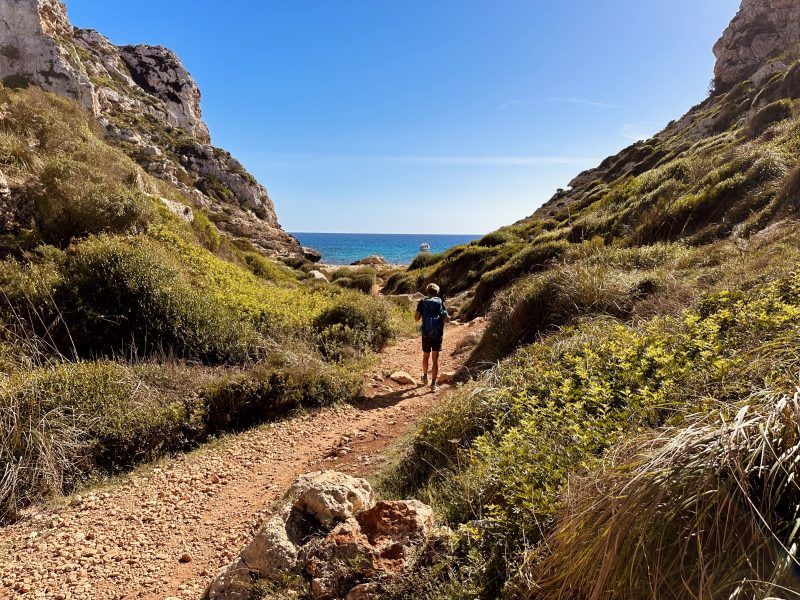
Compared with some other Mediterranean destinations, Menorca has retained a quieter and more natural character. Large-scale resorts are less dominant in many parts of the island, and it is easy to find peaceful coves, rural landscapes and stretches of coastline where nature remains the main attraction.
This balance between tourism and conservation is one of the reasons the island of Menorca is such an appealing destination for walkers. Away from the busiest beaches and towns, the landscape quickly becomes peaceful and surprisingly remote.
You will also find charming villages, small-scale hotels and the characteristic whitewashed houses and dry-stone walls that form part of Menorca’s traditional landscape. The island was declared a UNESCO Biosphere Reserve in 1993, recognising the importance of its ecosystems and the relationship between human activity and the natural environment.
Hiking on the island of Menorca
The best way to discover the island on foot is via the Camí de Cavalls, an ancient trail that follows almost the entire coastline of Menorca. The circular route is approximately 185 km long and has become one of the most distinctive long-distance walking routes in the Balearic Islands.
Historically, the path was used to defend and monitor the coastline. Today, it takes walkers through an impressive variety of landscapes, including gullies, rocky headlands, pine forests, farmland, wetlands and secluded beaches. Along the way, you will also encounter old watchtowers, lighthouses and other traces of Menorca’s history.
One of the pleasures of walking the Camí de Cavalls is how frequently the landscape changes. A morning may begin on a rocky coastal path and continue through woodland before arriving at a quiet cove where you can stop for a swim.
You do not necessarily have to walk all 185 km. You can concentrate on the northern coast or choose a walking holiday along the south of Menorca, completing selected stages of the Camí de Cavalls.
Alternatively, you can explore both the north and south of the island on foot if you want to experience the full contrast of Menorca’s landscapes.
What is the difference between north and south Menorca?
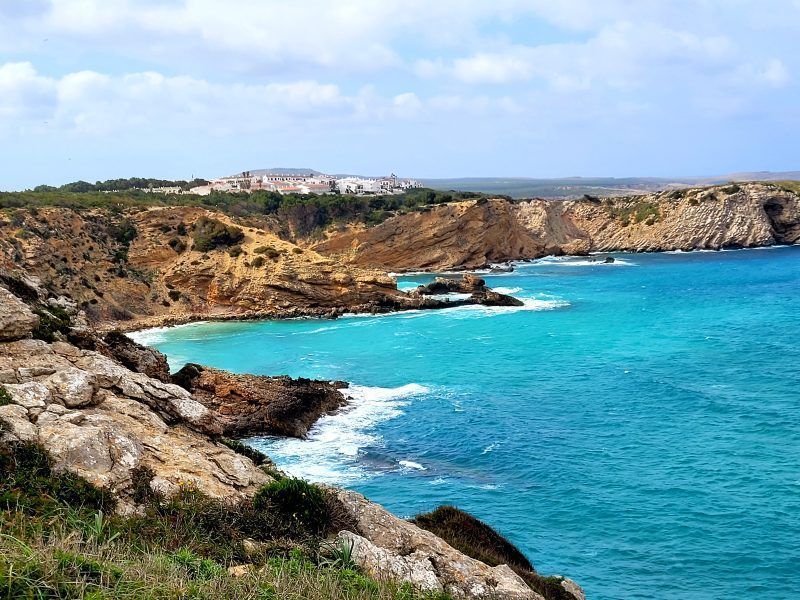
One of the most fascinating features of the island of Menorca is the contrast between its northern and southern coasts. The difference is not simply a matter of choosing between two sets of beaches: the geology, vegetation, colours and atmosphere can change considerably.
The north is generally more rugged, with dramatic rock formations, reddish earth and a more exposed coastline. Some stretches feel remote and almost untouched. The south, meanwhile, is associated with pale limestone, pine forests, sheltered coves and beaches with fine white sand.
The south also tends to have more tourist infrastructure and easier access to many popular beaches. In the north, some coves require a longer walk and there may be fewer facilities once you leave the towns behind.
This makes the choice particularly interesting for walkers. Neither side is necessarily “better”; they simply offer two very different ways to experience Menorca.
What makes the south of Menorca so beautiful?
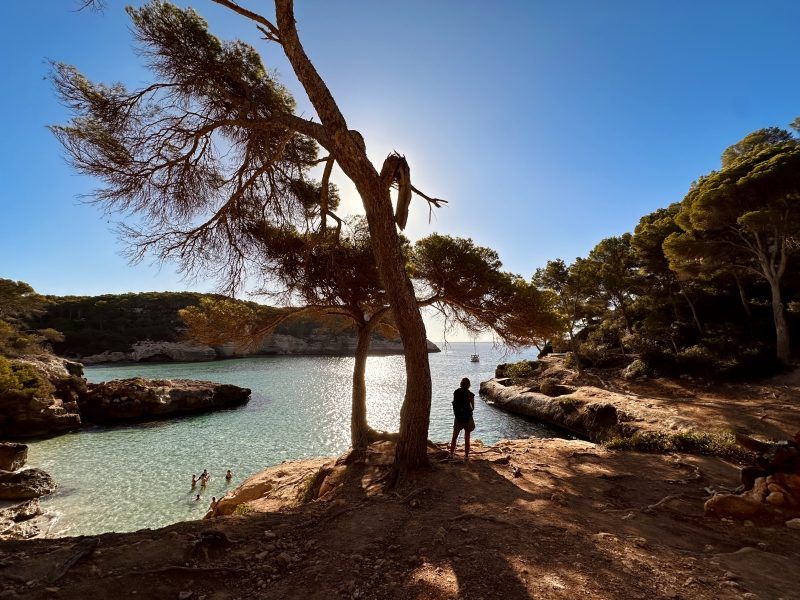
The south coast of the island of Menorca is probably the image that most people have in mind when they first imagine Menorca: white beaches, turquoise water, limestone cliffs and Mediterranean vegetation.
Many of its coves are surrounded by pine forests and sheltered by rocky cliffs, creating landscapes that can look almost tropical on sunny days. Beaches such as Cala Macarella and Cala Mitjana are among the best-known examples.
The terrain is also attractive for walkers because the route frequently alternates between woodland, coastal viewpoints and beaches. After several kilometres of walking, arriving at a quiet cove and taking off your walking shoes for a swim is difficult to beat.
What is walking in south Menorca like?
Walking in southern Menorca generally feels greener and more sheltered than in the north. Pine forests provide shade on some stretches, while the coves create natural stopping points throughout the day.
The popularity of the south also means that facilities are generally easier to find around the main resorts and beaches. Depending on the stage and season, you may find places to stop for a drink or something to eat. However, you should still carry sufficient water and supplies because many sections of the Camí de Cavalls remain completely natural.
There is also plenty of variety. Some beaches are broad and relatively accessible, while other coves require a walk to reach them. This mixture makes the south particularly suitable for travellers who want to combine active walking with time by the sea.
During a walking holiday in the south of the island of Menorca, swimming can easily become part of the day’s routine.
Who should choose south Menorca?
The south is a particularly good choice if this is your first walking holiday in Menorca or if beaches are one of your priorities. It offers the classic Mediterranean scenery for which the island is famous and generally provides a slightly more accessible introduction to the Camí de Cavalls.
Choose the south if you are looking for turquoise coves, white-sand beaches, greener scenery and a balance between hiking and relaxation.
What makes the north of Menorca so beautiful?
The north of the island of Menorca has a completely different personality. Its beauty is wilder, rougher and more dramatic. Here, reddish soils, dark rocks and exposed headlands contrast with the deep blue and green tones of the Mediterranean.
The geological formations in northern Menorca are much older than those found in the south, helping to create the striking colours and irregular terrain that characterise this part of the island.
Rather than the postcard-perfect white coves of southern Menorca, the north offers something more elemental. It is a landscape shaped by wind, sea and rock, and that feeling of remoteness is precisely what many walkers love about it.
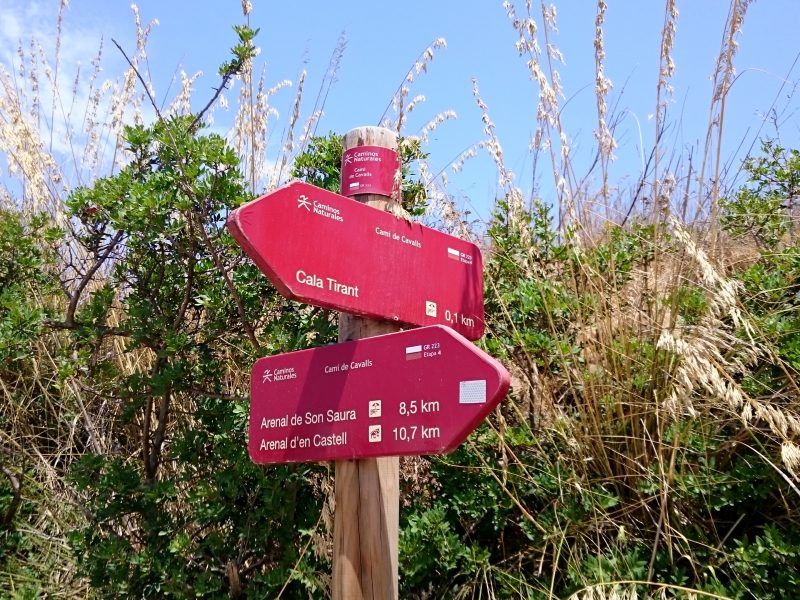
What is walking in north Menorca like?
Walking the northern Camí de Cavalls often feels more adventurous. There are fewer developed areas and some sections can be exposed to the wind. Depending on the stage, services may also be limited, so planning water and food becomes especially important.
The reward is tranquillity. You are more likely to experience long stretches of coastline where there are few other walkers and little development. The scenery can be dramatic, particularly where the trail crosses open headlands or approaches isolated beaches.
Beaches such as Cala Pregonda and Cala Pilar show another side of Menorca, where reddish and golden tones replace the bright white limestone scenery of the south.
For travellers looking for peace, open landscapes and a greater feeling of wilderness, a walking holiday along the northern Camí de Cavalls can be the ideal choice.
Who should choose north Menorca?
The north is especially attractive to walkers who value landscapes and solitude over facilities. It can also appeal to experienced hikers who enjoy routes that feel more remote and less polished.
Choose the north if you want wild scenery, fewer crowds, dramatic geology and a stronger sense of adventure.
North or south: which part of the island of Menorca should you walk?
Ultimately, your choice depends on what you want from your walking holiday.
If your ideal day involves hiking through pine forests before reaching a white-sand beach and swimming in turquoise water, the south is probably the better choice. It combines beautiful walking with the classic beach landscapes associated with Menorca.
If you prefer remote trails, unusual geology, exposed coastal scenery and fewer people, the north may suit you better. It offers a wilder side of the island and a real feeling of getting away from it all.
There is, however, no need to choose if you have enough time. Walking sections of both coasts allows you to understand why the island of Menorca is so interesting for hikers. The contrast between north and south is part of the experience itself.
More reasons to discover the island of Menorca on foot
Whichever coast you choose, walking allows you to see details that are easy to miss when travelling around the island by car.
Menorca has a remarkable prehistoric heritage, including talayots, navetas and other ancient structures scattered across the landscape. Traditional dry-stone walls, old agricultural paths and defensive towers also reveal how the island has been shaped by centuries of human activity.
Food is another part of the experience. Menorca is particularly famous for Mahón-Menorca cheese, while local cuisine also reflects the island’s close relationship with the Mediterranean Sea and its rural traditions.
Nature lovers will find plenty to observe as well. Menorca’s combination of coastal habitats, forests, wetlands and agricultural landscapes supports a rich variety of plants, birds, butterflies and other wildlife.
Most importantly, exploring the island of Menorca on foot gives you time to appreciate its rhythm. Rather than simply moving from one famous beach to another, you experience the landscapes that connect them: the forests, cliffs, farmland, stone walls and hidden coves that make Menorca such a rewarding walking destination.
Whether you choose the turquoise coves of the south, the rugged landscapes of the north or a route combining both, the Camí de Cavalls offers one of the best ways to discover the island step by step.
What is the difference between the north and south coast of Menorca?
The north coast of the island of Menorca is generally wilder and more rugged, with reddish soils, dramatic rocks and more remote beaches. The south is known for white-sand coves, turquoise waters, limestone cliffs and Mediterranean pine forests. The south also tends to have more tourist facilities and easier access to popular beaches.
Which side of the island of Menorca should I choose for walking?
Choose the south if you want white-sand beaches, turquoise water, greener landscapes and relatively easy access to facilities. Choose the north if you prefer wild scenery, fewer people and a more remote hiking experience. If you have enough time, combining both gives you the most complete experience of the island of Menorca.
Where can you find the most unspoiled beaches in Menorca?
Both coasts have unspoiled beaches, but the north is particularly known for remote coves such as Cala Pregonda and Cala Pilar. In the south, Cala Mitjana and Cala Macarella combine beautiful natural surroundings with the characteristic turquoise waters and pale sand of southern Menorca.
Can you walk around the entire island of Menorca?
Yes. The Camí de Cavalls is a circular coastal trail of approximately 185 km that allows walkers to explore almost the entire coastline of the island of Menorca. You can walk the full route or choose individual sections in the north or south depending on the time you have available.
Is north or south Menorca better for a first walking holiday?
For many first-time visitors, the south is an accessible introduction thanks to its famous beaches, greener scenery and greater availability of facilities. However, walkers who prioritise solitude and rugged landscapes may prefer the north from the start. Neither is objectively better: they simply offer different experiences.

Comment (0)