

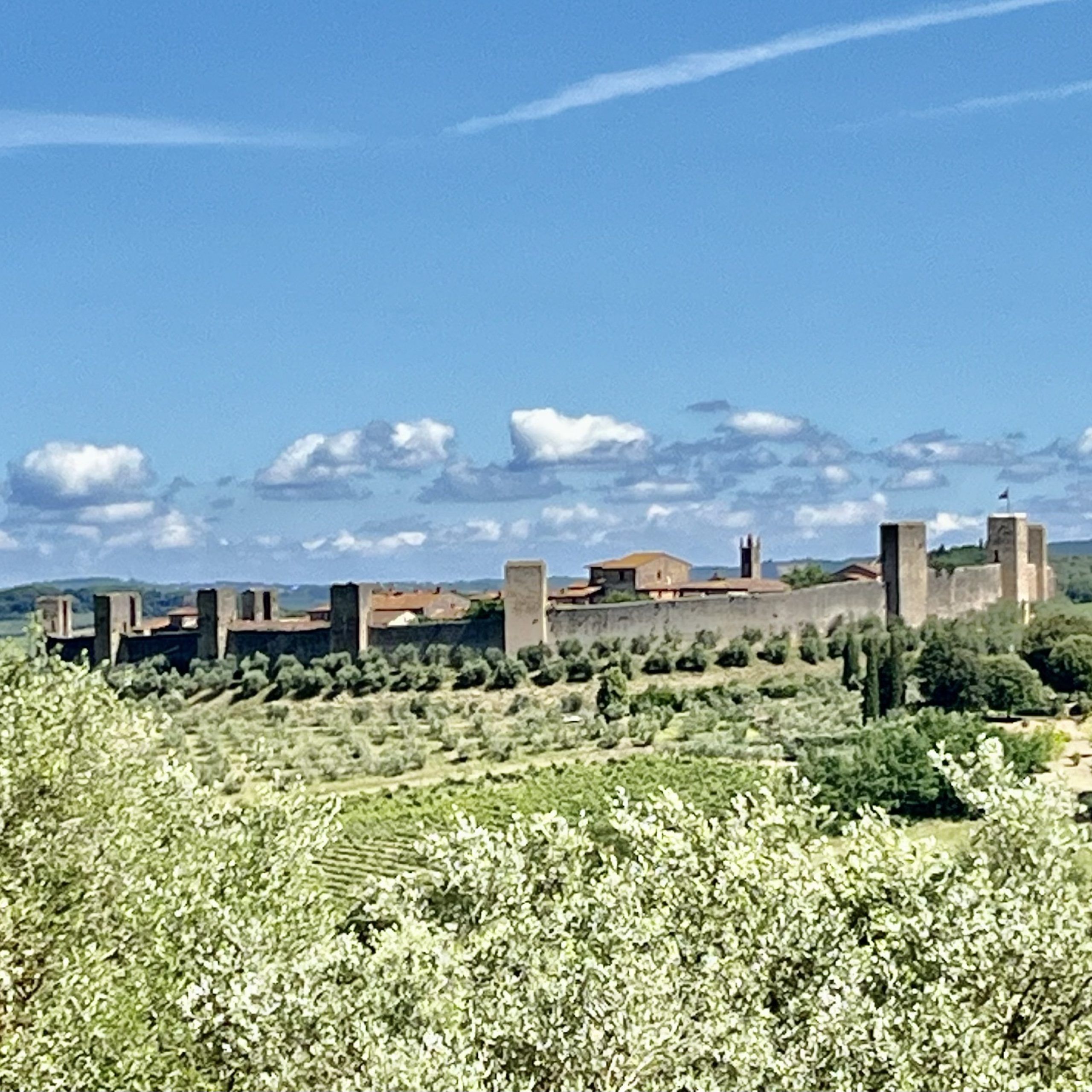
If you are wondering what to see between Lucca and Siena, the answer is simple: some of the most beautiful towns, landscapes and cultural highlights in Tuscany. This part of the Via Francigena brings together medieval villages, rolling hills, vineyards, olive groves and historic cities that feel perfectly suited to slow travel.
Instead of moving quickly from one famous place to another, walking between Lucca and Siena allows you to experience Tuscany step by step. You pass through quiet countryside, arrive in hilltop towns on foot and notice details that are easy to miss when travelling by car.
This guide focuses on the main highlights you can enjoy along the way, from Lucca’s elegant historic centre to San Gimignano’s towers, Monteriggioni’s walls and the final arrival in Siena.
Why Explore Tuscany Between Lucca and Siena?
The route between Lucca and Siena is one of the most rewarding ways to experience Tuscany because it combines landscape, culture and history in a very natural way. It is not just a journey between two cities. It is a sequence of small discoveries: a quiet village, a vineyard-covered hill, a medieval square, a country church or a view that suddenly opens over the Tuscan countryside.
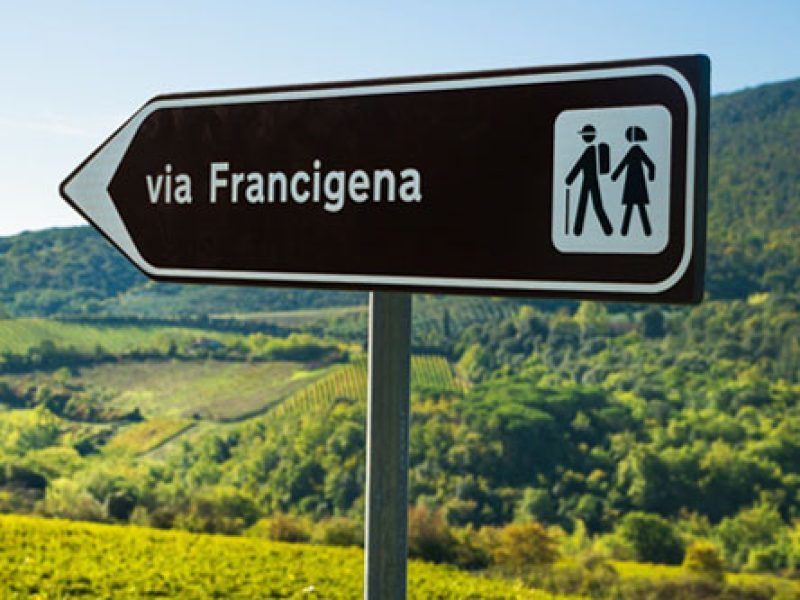
For walkers, this area is especially attractive because many of its most beautiful places are connected by the Via Francigena, the historic pilgrimage route that crosses Tuscany on its way to Rome. Today, this route is ideal for travellers looking for a more meaningful and unhurried holiday.
If you want to know what to see between Lucca and Siena, it helps to think of the journey as a combination of three experiences: historic towns, rural landscapes and the rhythm of walking. Together, they create one of the most memorable sections of Tuscany.

A Classic Tuscan Experience on Foot
Between Lucca and Siena, Tuscany looks exactly as many travellers imagine it: soft hills, cypress trees, stone farmhouses, vineyards, olive groves and medieval towns rising above the landscape. What makes the experience different on foot is the pace. You do not simply visit each place; you gradually approach it, walk through it and then leave it behind as the landscape changes again.
This makes the journey feel more personal. A town is not just a stop on a map, but the reward at the end of a walking day. A view is not just something you see from a window, but something you reach after hours of moving through the countryside.
Lucca: A Beautiful Place to Begin
Lucca is one of the best starting points for exploring this part of Tuscany. Calm, elegant and easy to enjoy on foot, the city has a historic centre surrounded by Renaissance walls that are now used as a walking and cycling path.
Before starting the route, it is worth spending time in Lucca rather than treating it only as a departure point. The city has a relaxed atmosphere, beautiful churches, lively squares and streets that invite you to slow down from the very beginning.
What to See in Lucca Before You Leave
One of Lucca’s main highlights is its city walls. Walking along them gives you a peaceful view of the town and is a gentle introduction to the days ahead. Piazza dell’Anfiteatro is another essential stop, with its oval shape and warm atmosphere.
You can also visit Lucca Cathedral, explore the historic streets and enjoy a quiet meal before the walking begins. Starting here sets the tone for the rest of the journey: cultural, beautiful and unhurried.
Altopascio and the Pilgrim Tradition
After leaving Lucca, the route gradually moves towards smaller towns and rural landscapes. One of the first important places is Altopascio, a town historically connected with pilgrimage and hospitality.
Altopascio may not be as famous as San Gimignano or Siena, but it has an important place in the story of the Via Francigena. For centuries, it was known as a stop where pilgrims and travellers could find help, food and rest.
This makes it an interesting place to understand the older spirit of the route. It reminds you that the journey between Lucca and Siena is not only scenic, but also part of a much longer tradition of people crossing Europe on foot.
San Miniato: Hilltop Views and Tuscan Character
San Miniato is one of the first truly memorable hilltop towns on the way towards Siena. Set above the surrounding countryside, it offers wide views and a strong sense of place. The town has medieval streets, historic buildings and a quiet elegance that makes it a rewarding stop.
For many walkers, San Miniato marks the moment when the route starts to feel more deeply Tuscan. The terrain becomes more rolling, the views become wider and the journey begins to move into the landscapes that define this part of Italy.
Why San Miniato Is Worth Your Time
San Miniato is a good place to pause, explore slowly and enjoy the views. Its historic centre is compact but full of character, and its elevated position gives a wonderful perspective over the countryside.
It is also a place where food and local identity are important. Depending on the season, travellers may hear about its connection with truffles and Tuscan gastronomy, which adds another layer to the experience.
Gambassi Terme: A Quiet Stop in the Countryside
Gambassi Terme is a peaceful stop between some of the better-known towns on the route. Surrounded by hills and countryside, it offers a quieter kind of beauty. It may not be the most famous highlight between Lucca and Siena, but it fits perfectly into the rhythm of a walking holiday.
After a day on the trail, places like Gambassi Terme often become especially enjoyable. They give you space to rest, recover and enjoy the slower side of Tuscany without the crowds of more visited towns.
A Place to Slow Down
The name Gambassi Terme reflects the town’s thermal tradition, and even if you do not visit a spa, the idea of rest feels very appropriate here. It is the kind of place where the journey feels less about sightseeing and more about being present in the landscape.
If you are planning your route, this is also a good reminder not to focus only on the most famous names. Some of the pleasure of walking between Lucca and Siena comes from the smaller, quieter stops along the way.
San Gimignano: Towers, Views and Medieval Streets
San Gimignano is one of the great highlights of the journey. Famous for its medieval towers, it is one of the most recognisable towns in Tuscany and a place many travellers remember long after the route is over.
Arriving in San Gimignano on foot makes the experience even more special. You see the towers from a distance, rising above the hills, and the approach gives you time to appreciate the town before entering its historic centre.
What to See in San Gimignano
The towers are the most iconic feature of San Gimignano, but the town is also worth exploring for its streets, squares, viewpoints and local atmosphere. Piazza della Cisterna and Piazza del Duomo are among the most important areas, but part of the pleasure is simply wandering through the town.
San Gimignano can be busy, especially during the day, so staying overnight or visiting early can make the experience more peaceful. This also gives you time to enjoy the town after many day visitors have left.
If you are planning the journey on foot, it is also worth thinking carefully about where to sleep each night. Our guide to where to stay on the Via Francigena explains the different types of accommodation you may find along the route.
Colle di Val d’Elsa and the Elsa Valley
Between San Gimignano and Monteriggioni, Colle di Val d’Elsa is another interesting stop. It has a historic upper town, local character and a position that makes it a useful and pleasant place along the route.
While it is sometimes overlooked in favour of more famous towns, Colle di Val d’Elsa adds variety to the journey. It offers a more local Tuscan atmosphere and gives walkers another perspective on the region.
A Less Obvious but Rewarding Stop
Colle di Val d’Elsa is a good example of why walking through Tuscany can be so rewarding. Not every place needs to be world-famous to be memorable. Sometimes a quiet street, a view over the valley or a simple meal after walking can become one of the best moments of the trip.
If you are deciding what to see between Lucca and Siena, make space for these less obvious places too. They help balance the experience and make the journey feel more authentic.
Monteriggioni: One of Tuscany’s Most Iconic Walled Villages
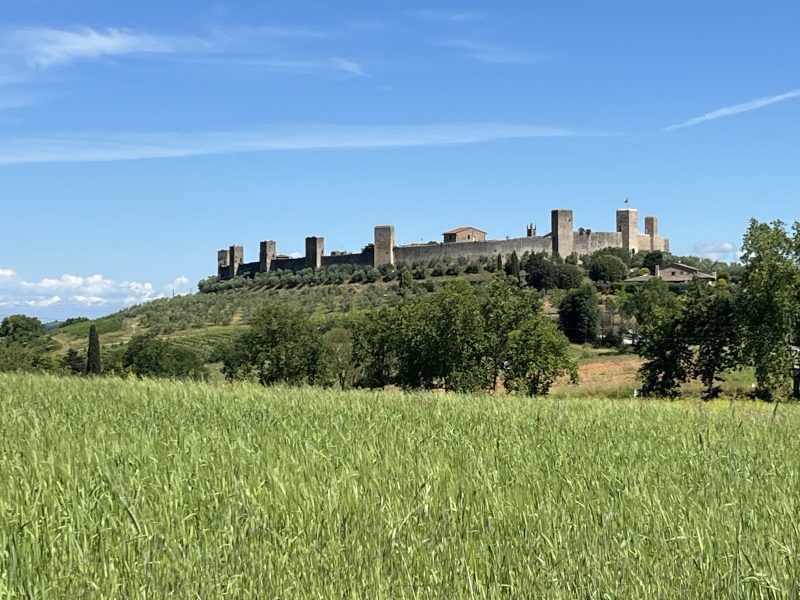
Monteriggioni is one of the most striking places before reaching Siena. Small, fortified and beautifully preserved, it feels almost like a village from another time. Its circular walls and towers create one of the most memorable images of medieval Tuscany.
For walkers, Monteriggioni is especially rewarding because it appears as a compact and complete vision of the past. You do not need many hours to visit it, but the impression it leaves is strong.
Why Monteriggioni Is So Memorable
The main attraction is the village itself: the walls, the towers, the small square and the feeling of entering a protected medieval space. It is a place where the scale is part of the charm. Everything feels close, simple and atmospheric.
Monteriggioni is also a perfect final highlight before Siena. After days of countryside and smaller towns, it prepares you for the sense of history that becomes even stronger when you arrive in the city.
Siena: A Powerful End to the Journey
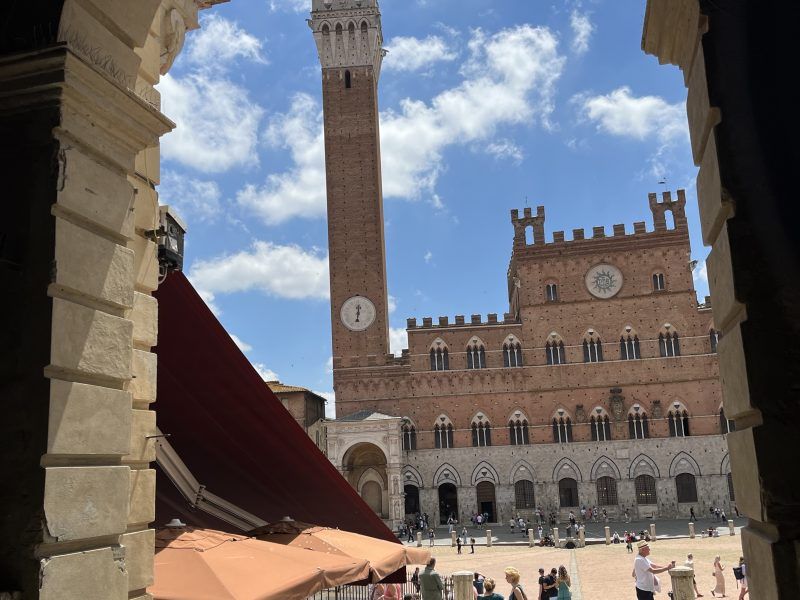
Siena is one of the most beautiful cities in Italy and a memorable end to this section of the route. Arriving on foot gives the city a different meaning. It is not just a destination; it is the reward after several days of walking through Tuscany.
The city’s medieval centre, dramatic streets and rich artistic heritage make it a place worth enjoying slowly. After walking from Lucca, it is a good idea to spend at least one extra night in Siena if possible.
What to See in Siena After the Walk
Piazza del Campo is the heart of Siena and one of the most impressive squares in Italy. It is a wonderful place to sit, rest and take in the feeling of arrival. Siena Cathedral is another essential visit, known for its striking façade and richly decorated interior.
Beyond the main monuments, Siena is a city for wandering. Its narrow streets, viewpoints, small shops and restaurants make it an ideal place to end the journey without rushing home immediately.
The Landscapes Between Lucca and Siena
The towns are a major part of the experience, but the landscapes between them are just as important. Walking allows you to enjoy the countryside in a way that feels direct and immersive. You pass vineyards, olive groves, woods, fields, farmhouses and open hills that change with the light and the season.
This is one of the reasons why the journey is so memorable. You are not only moving from one famous place to another. You are experiencing the spaces between them, and those spaces are often where the true beauty of the route appears.
Vineyards, Olive Groves and Rolling Hills
For many travellers, the classic Tuscan landscape is one of the main reasons to walk this route. Vineyards and olive groves appear throughout the journey, often framed by hills and cypress trees.
On foot, these landscapes are not just scenery. They become part of the rhythm of the day. You notice the shade, the climbs, the colours, the sounds and the small details that make each stage feel different.
Small Churches, Country Roads and Rural Life
Some of the most meaningful sights between Lucca and Siena are modest ones: a country chapel, a stone farmhouse, a quiet lane, a village bar or a view across the fields. These details give the journey its human scale.
They also show a side of Tuscany that is harder to experience on a fast trip. Walking gives you the chance to see not only the famous towns, but also the rural life that connects them.
Practical Tips for Exploring Between Lucca and Siena
If you are planning to explore this area on foot, it is important to think beyond the list of places. Distances, weather, terrain and time for sightseeing all affect the experience.
The best itineraries are not always the fastest ones. A slightly slower pace often allows you to enjoy the towns properly, recover at the end of each stage and avoid feeling that the journey is only about reaching the next overnight stop.
How Many Days Do You Need?
Most walking itineraries between Lucca and Siena take around a week, depending on the exact route, daily distances and how much time you want in each town. Some travellers prefer a more active rhythm, while others choose shorter stages and extra nights in key places.
If you want to enjoy the cultural highlights properly, it is worth allowing enough time for Lucca, San Gimignano, Monteriggioni and Siena. These places are not just checkpoints. They are a major part of the journey.
Best Time to Visit
Spring and autumn are usually the most comfortable times to walk between Lucca and Siena. Temperatures are generally better for long days on foot, the landscapes are beautiful and the experience tends to feel more relaxed than in the hottest summer months.
Summer can still be enjoyable, but heat may make some stages more demanding, especially in open countryside. If travelling during warmer months, early starts, sun protection and plenty of water are essential.
Don’t Rush the Highlights
When planning the journey, it can be tempting to focus only on distances. But this route is not just about walking from one place to the next. It is about having enough time to enjoy what you find along the way.
Leaving space in the itinerary for relaxed afternoons, local meals and spontaneous stops can make the whole experience much richer.
Walking the Via Francigena Between Lucca and Siena
Many of the places mentioned in this guide are connected by the Via Francigena, making the route between Lucca and Siena one of the best ways to experience Tuscany on foot. The path offers a beautiful balance between countryside and culture, with enough variety to keep every day interesting.
If you want a structured walking holiday, the Via Francigena from Lucca to Siena is a wonderful option. It allows you to follow a historic route while enjoying the comfort of organised accommodation, luggage transfers and support along the way.
A Route That Can Be Adapted to Your Pace
One of the advantages of this section is that it can be adapted depending on your walking experience, available time and travel style. Some people want to focus on the walking itself, while others prefer to leave more space for food, wine, photography and cultural visits.
There is no single correct way to experience it. The best itinerary is the one that allows you to enjoy both the path and the places along it.
How WAW Travel Can Help You Plan Your Trip
Planning a walking holiday between Lucca and Siena involves several practical details: choosing the right stages, booking accommodation, arranging luggage transfers and making sure the itinerary fits your pace. This is where WAW Travel can help.
We design walking trips that allow you to enjoy the journey without worrying about the logistics. You walk with a lighter daypack, stay in carefully selected accommodations and have support available if you need help during the trip.
Whether you want a relaxed itinerary with time to explore or a more active walking holiday through Tuscany, we can help you create a route that fits the kind of experience you are looking for. You can also contact WAW Travel if you want advice before choosing the right itinerary.
FAQs About What to See Between Lucca and Siena
What are the main places to see between Lucca and Siena?
Some of the main highlights include Lucca, Altopascio, San Miniato, Gambassi Terme, San Gimignano, Colle di Val d’Elsa, Monteriggioni and Siena. Each place offers something different, from medieval towers and walled villages to quiet countryside and historic streets.
Is San Gimignano worth visiting on this route?
Yes. San Gimignano is one of the most memorable stops between Lucca and Siena. Its medieval towers, historic centre and hilltop views make it a major highlight, especially when you arrive on foot through the surrounding countryside.
Can I explore this area without walking the full route?
Yes. You can visit many of these towns independently or walk only part of the route. However, walking between them gives the experience a different rhythm and helps you appreciate the landscapes and smaller places between the main highlights.
How many days should I spend between Lucca and Siena?
If you are walking, around one week is a common duration, although this depends on your pace and chosen itinerary. If you want more time for sightseeing, food and relaxed afternoons, adding extra nights in places like Lucca, San Gimignano or Siena is a good idea.
Is This Part of Tuscany Right for You?
If you are looking for a journey that combines walking, culture, landscapes and local atmosphere, the area between Lucca and Siena is a wonderful choice. It offers famous places, such as San Gimignano and Siena, but also quieter towns and countryside that make the experience feel complete.
This is not a route to rush. Its beauty lies in the rhythm of the days: walking in the morning, arriving in a historic town, enjoying a local meal and noticing how the landscape changes as you move south through Tuscany.
For travellers who want to experience Italy in a slower and more meaningful way, discovering what to see between Lucca and Siena on foot can be one of the most rewarding ways to enjoy Tuscany. If this sounds like the kind of trip you are looking for, take a look at our Via Francigena Lucca to Siena itinerary and start imagining your own journey through Tuscany.

Comment (0)