

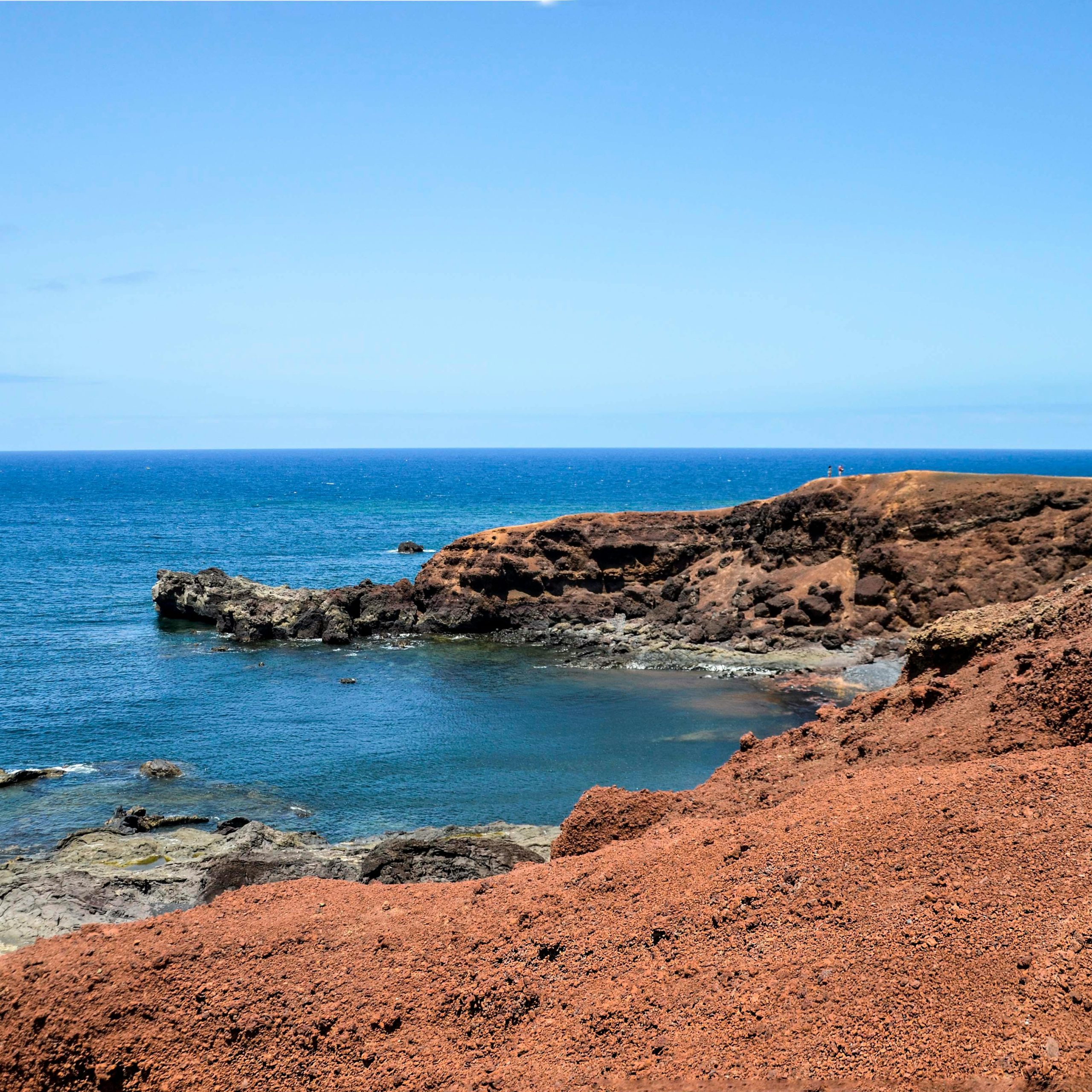
Lanzarote is unlike anywhere else on earth. Shaped by centuries of volcanic activity, this Canary Island carries a raw, elemental quality that sets it apart from every other European destination. Its landscapes look more like the surface of another planet than a Spanish island in the Atlantic, and that is precisely what makes it so extraordinary.
The island is actually a UNESCO Biosphere Reserve, a status it has held since 1993 and one that reflects how seriously Lanzarote takes the relationship between human life and the natural world.
We truly believe that exploring Lanzarote nature on foot is one of the most rewarding ways to understand why this place earned that recognition. In this article we take a closer look at what makes the island’s natural environment so exceptional, and why walking is the best way to experience it.
Lanzarote nature: volcanic landscapes and wild beauty
The contrast between black volcanic rock, vivid green valleys and the deep blue of the Atlantic is one of the defining visual experiences of Lanzarote nature. It is a landscape that gets under your skin, and one that rewards exploration on foot more than almost anywhere else in Europe.
That is why we offer a dedicated 8-day walking holiday on Lanzarote following the GR131 trail across the island, as well as a 13-day journey that combines Lanzarote with the equally wild and beautiful Fuerteventura. Let’s get to details!
Why Lanzarote nature is so unique
To understand why Lanzarote nature is so special, we need to look at how this island came to be.
Lanzarote is one of the oldest of the Canary Islands, its first volcanic materials emerging from the seabed some 15 million years ago. The island was built gradually through successive phases of volcanic activity, and the most dramatic of these, a six-year eruption between 1730 and 1736, reshaped the entire landscape and buried a third of the island’s farmland under lava and ash. The result is the raw, elemental terrain you see today: a place that looks and feels unlike anywhere else in Europe.
Lanzarote sits just 140 kilometres off the coast of Morocco, giving it a warm, dry climate year round. The island is still considered volcanically active, and the heat beneath Timanfaya National Park is a constant reminder that the forces that formed this landscape have not finished with it yet!
In 1993, Lanzarote became a UNESCO Biosphere Reserve, the first time an entire inhabited island had received this designation. This status reflects a long-standing commitment to balancing conservation with everyday life. In practice, this means strict limits on building heights and urban development, protected natural areas covering around 43% of the island’s surface, and a planning framework designed to keep tourism from overwhelming the landscape that makes Lanzarote so worth visiting in the first place.
Volcanic landscapes that define Lanzarote
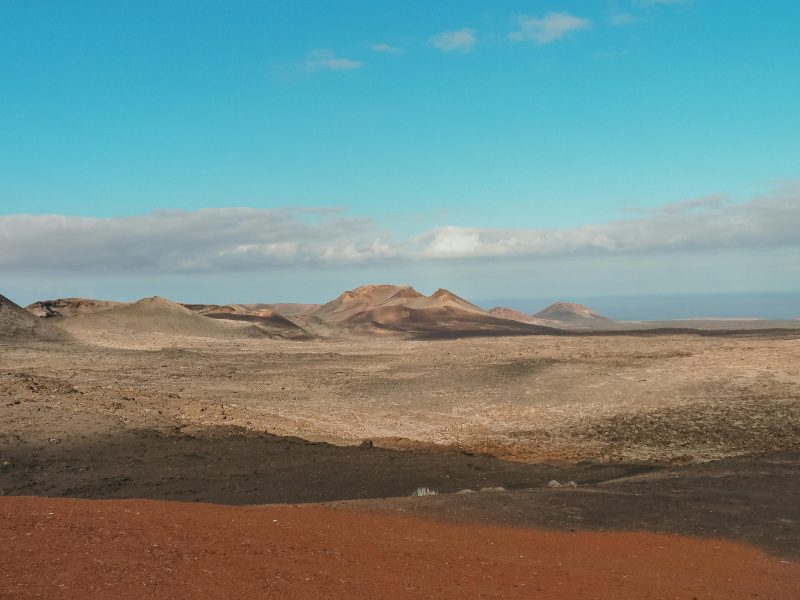
As mentioned above, the most dramatic expression of Lanzarote nature is Timanfaya National Park, a vast area of solidified lava, craters and volcanic cones in the heart of the island. The eruptions of the 18th century left more than 300 (!) volcanic cones across the landscape.
This is a phenomenon that will feel familiar to anyone who has walked Iceland’s Laugavegur trail, where geothermal heat shapes the landscape in similarly striking ways. If that kind of volcanic terrain speaks to you, our account of hiking the Laugavegur is worth a read!
Beyond Timanfaya, the island is crossed by ancient lava flows that have hardened into extraordinary shapes and textures. Walking through this terrain gives you a sense of scale and geological time that is difficult to find anywhere else in Europe, and we have eight reasons why hiking Lanzarote will surprise you more than you might expect. 🙂
Wildlife and endemic plants of Lanzarote
The volcanic soil is one of the most distinctive features of Lanzarote nature, supporting a surprisingly rich flora. Many plants found here have adapted over thousands of years to the island’s dry, mineral-rich conditions and are found nowhere else in the world.
Tabaiba, cardón and various species of Canarian spurge are among the most visible expressions of Lanzarote nature, growing directly from the lava fields with deep roots that find nutrients in the most unlikely ground.
Birdlife on the island is equally remarkable. In fact, the Canary Islands are an important stopover point for migratory birds travelling between Europe and Africa, and Lanzarote’s coastal wetlands and rocky cliffs attract a wide variety of species throughout the year.
The Chinijo Archipelago, just off the northern coast, is one of the most important nesting sites in the Macaronesian region. For more on the wider island chain’s ecology, our GR131 trail guide for Fuerteventura gives a useful sense of the natural environment across the Canary Islands, give it a read!
Beaches, cliffs and coastal nature
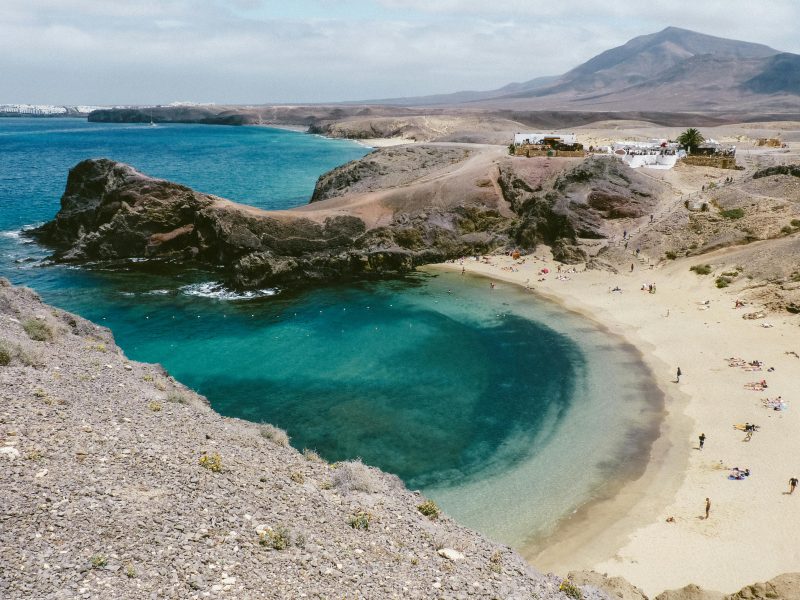
Lanzarote nature is nowhere more varied than along its coastline. On the southern and eastern shores of Lanzarote, you find long sandy beaches with calm, clear water, while the north and west coasts are characterised by breathtaking cliffs, blowholes and natural lava pools. The contrast between the black rock and the turquoise Atlantic is a constant feature of Lanzarote nature at its most striking.
And the coastal path between El Golfo and Playa de Janubio, for example, takes you past a green lagoon coloured by algae, volcanic rock formations and one of the island’s most spectacular sunsets!
Why Lanzarote is perfect to explore on foot
Walking strips away the distance between you and a landscape, and on Lanzarote, this matters enormously. And yes, we are fully aware that a walking holiday company recommending walking is not exactly a surprise. But trust us on this one! 🙂 The resort areas of the south are busy, but step away from them and the interior reveals Lanzarote nature at its most unhurried and remote. Walking here, you are more likely to meet a farmer tending his vines than a fellow tourist.
The GR131 is actually a long-distance trail that crosses all seven Canary Islands, and on Lanzarote it runs from north to south through lava fields, agricultural villages and coastal paths that no road will ever take you near. It is one of the most extraordinary walking routes in Europe, and it forms the backbone of our 8-day Lanzarote walking holiday.
And if eight days is not enough, our 13-day Canary Islands guide covers a longer adventure across both Lanzarote and the equally wild Fuerteventura. We can imagine you are already tempted!
Best areas to experience Lanzarote’s nature while walking
The route of our GR131 adventure begins in the north, in Órzola: the La Corona Natural Park is where Lanzarote nature feels most raw and undisturbed, rocky open ground and views stretching across to the island of Fuerteventura. From here the trail leads inland to Haría, a town tucked into a green valley of palms that feels like a world apart from the volcanic landscape surrounding it, and onwards to Peñas del Chache, the highest point of the hike and one of the most spectacular viewpoints on the island.
Further south, the trail passes through Teguise, the island’s former capital, with its tiled streets and historic architecture, and continues into the wine-growing region of La Geria, where vines grow in individual craters dug into the volcanic soil. It is one of the most unusual agricultural landscapes in Europe, and walking through it in the late afternoon light is an experience that stays with you!
The route ends in Playa Blanca in the far south, a former fishing village surrounded by calm water, natural coves and the unspoilt beach of Playa de Papagayo. A more satisfying final destination is hard to imagine. 🙂
Explore Lanzarote’s nature on a walking holiday
A walking holiday is one of the most immersive and rewarding ways to discover Lanzarote nature. WAW Travel offers a carefully arranged 8-day walking holiday on Lanzarote that takes you through extraordinary Lanzarote nature, with comfortable accommodation, tailor-made support and everything organised so you can focus entirely on the experience.
Write to us at [email protected] and let us know what you have in mind!

Comment (0)