from 0 review
6 days
Up to 30 days
Unlimited
English
Overview
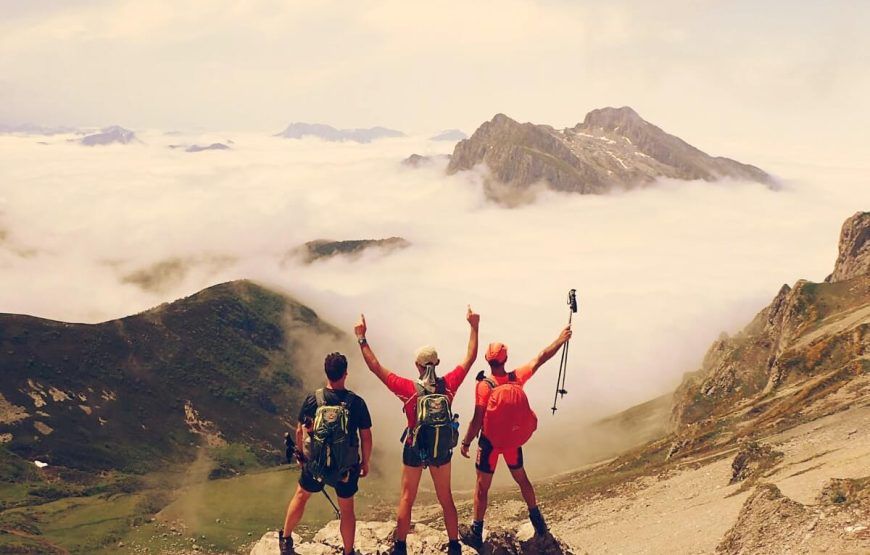
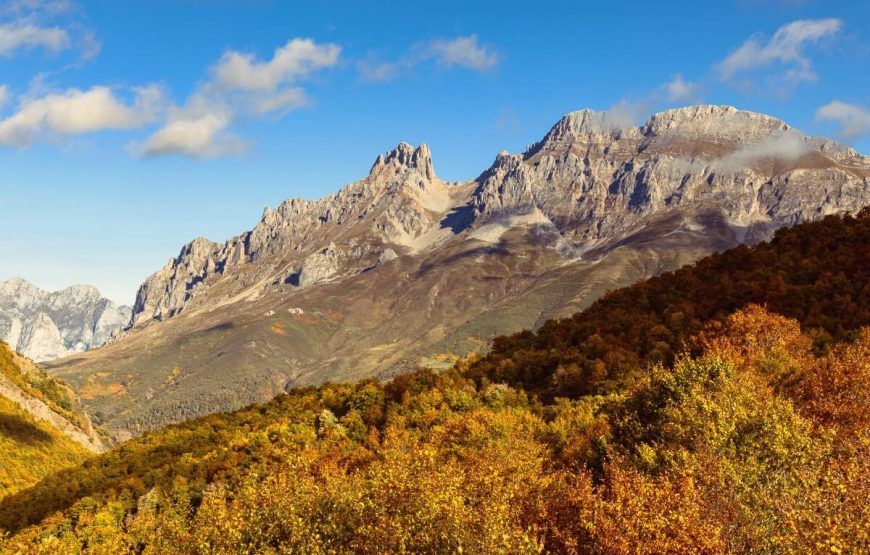
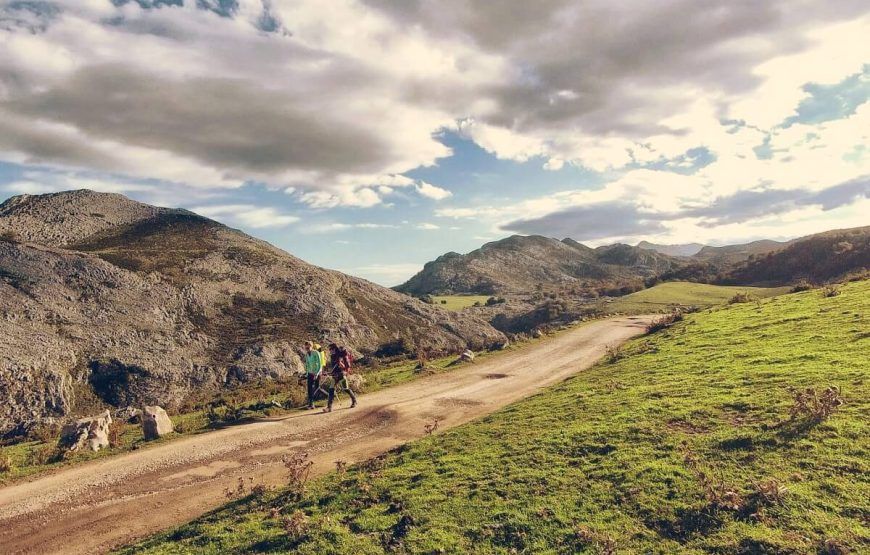
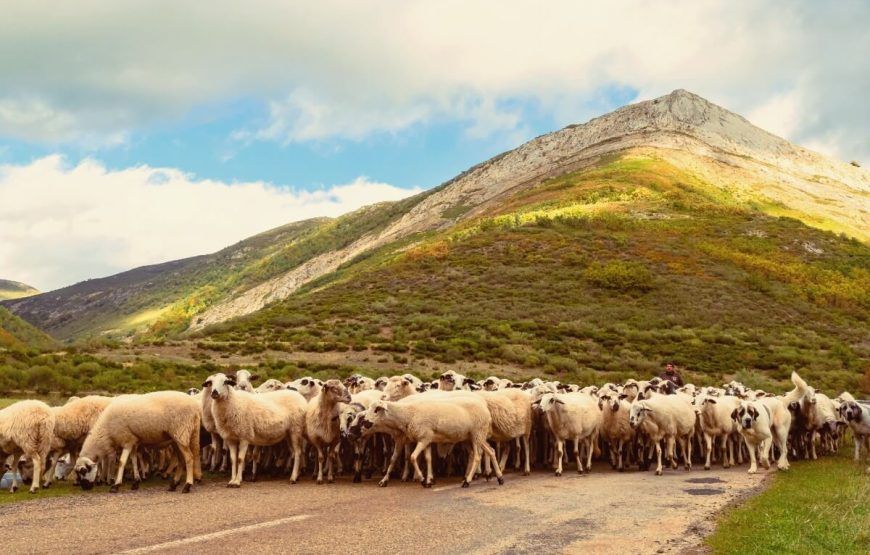
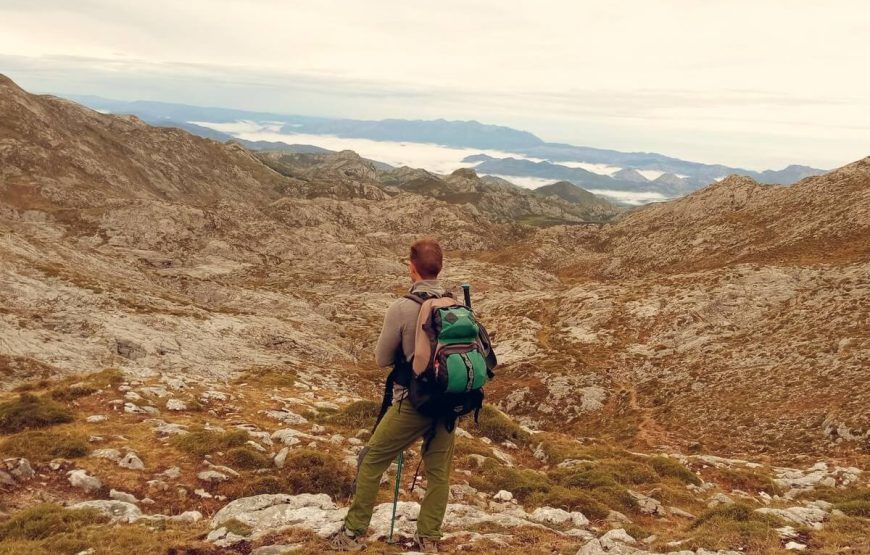
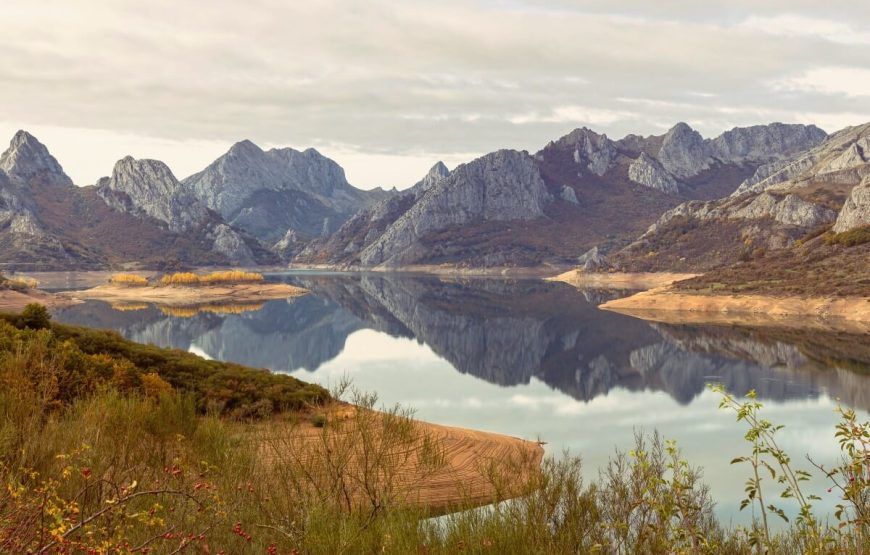
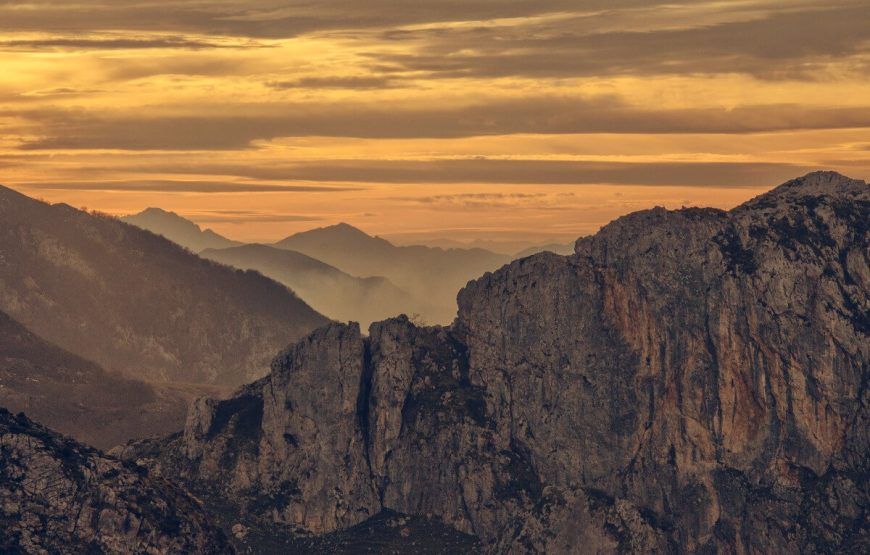
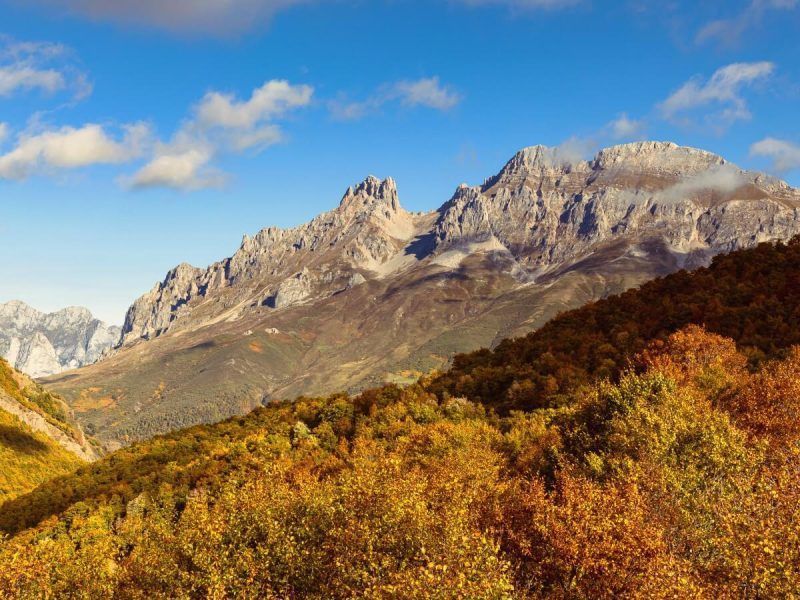
Hiking in Picos de Europa: one of the most dramatic and least crowded mountain destinations in Spain. Fourteen limestone peaks rise above 2,600 metres, glacial rivers carve deep gorges through the rock, and tiny villages sit tucked into valleys that feel untouched by time. This 7-day walking holiday takes you through the heart of this extraordinary national park, from the cable car at Fuente Dé to the famous Ruta del Cares, the sacred glacial lakes of Covadonga, the car-free village of Bulnes, and a final afternoon on one of the most beautiful beaches in northern Spain.
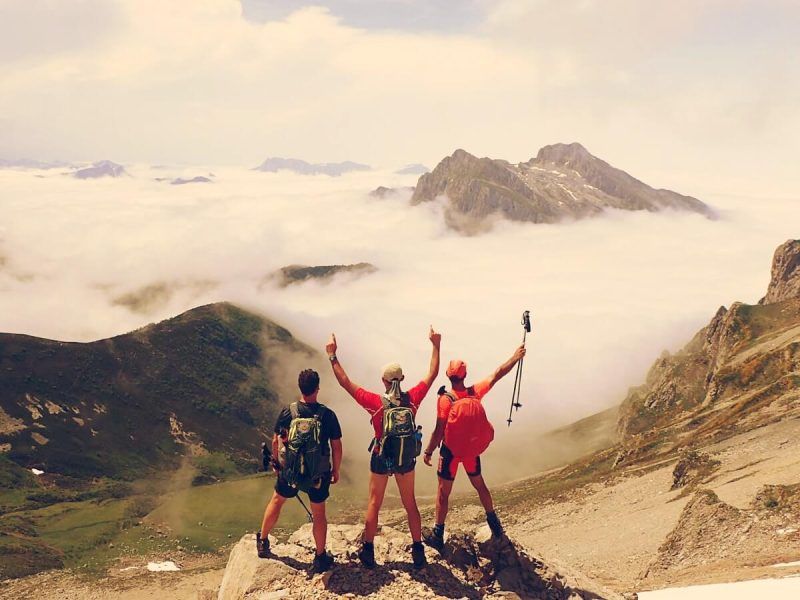
This is a tailor made trip at Level 1, meaning routes are accessible and suitable for walkers without technical mountain experience. Every stage combines walking with short drives, allowing you to cover more ground and reach spots that walking alone would not make possible. Some stages also include extra transport options such as the Fuente Dé cable car, the Bulnes funicular, or a bus to the glacial lakes, making this a genuinely enjoyable adventure rather than an endurance test. On certain nights you have the option to sleep in a mountain refuge for a more immersive experience in the high peaks.
Picos de Europa was the first national park to be declared in Spain, back in 1918, and today it is the third most visited in the country after Teide in Tenerife and Guadarrama. If you love the Camino de Santiago but want something wilder, more remote and more vertical, this trip is for you. We recommend hiking between April and October.
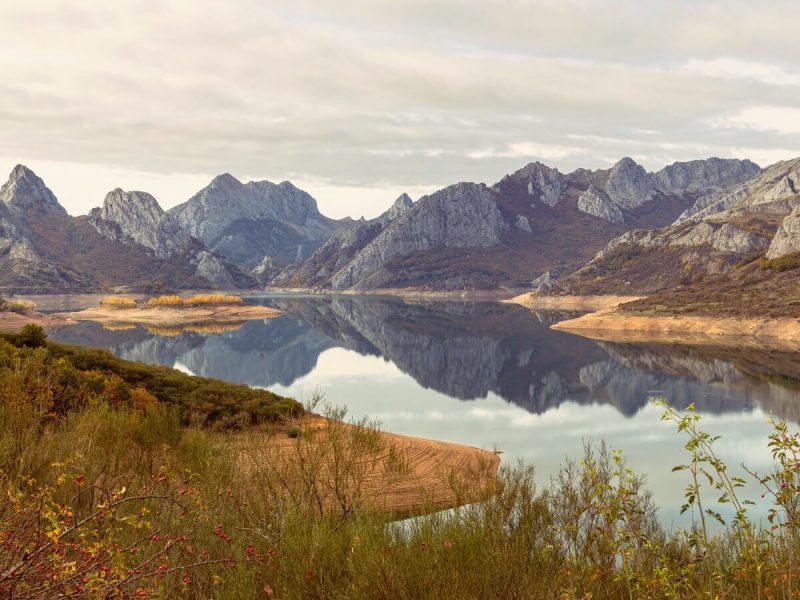
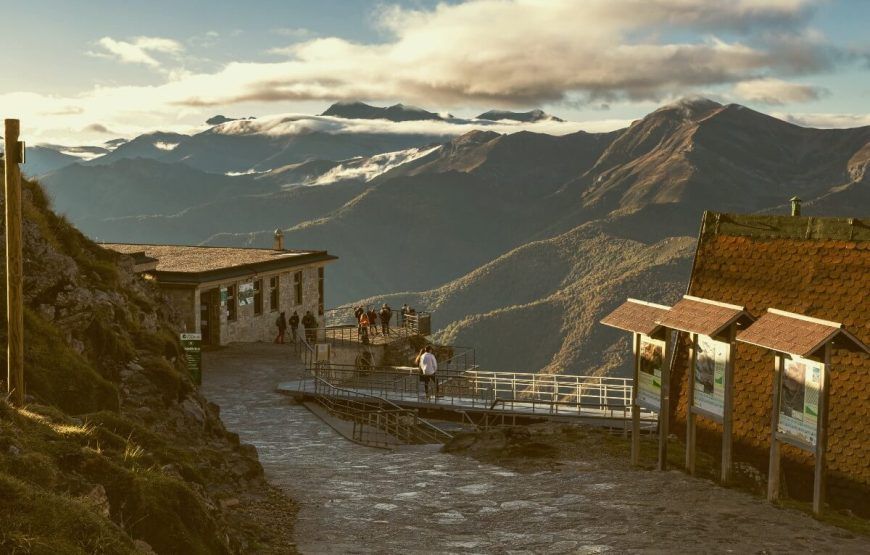
Your journey begins in Fuente Dé, a small village nestled at the foot of the Picos de Europa massif, famous for its glacial cirque. From here you take the cable car up 800 metres to the Mirador del Cable viewpoint at 1,850 metres above sea level, where the views across the Central Massif are extraordinary. The cable car runs almost year-round from 10:00 to 17:00, and tickets should be purchased well in advance. From the summit, you walk freely for a few hours through the high mountain landscape before taking the cable car back down to Fuente Dé, where you spend the night. There is easy parking in the village.
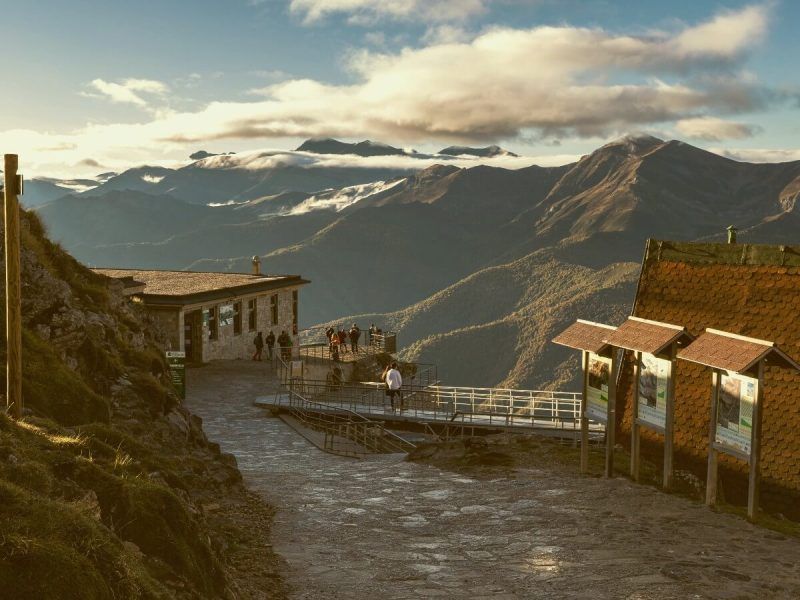
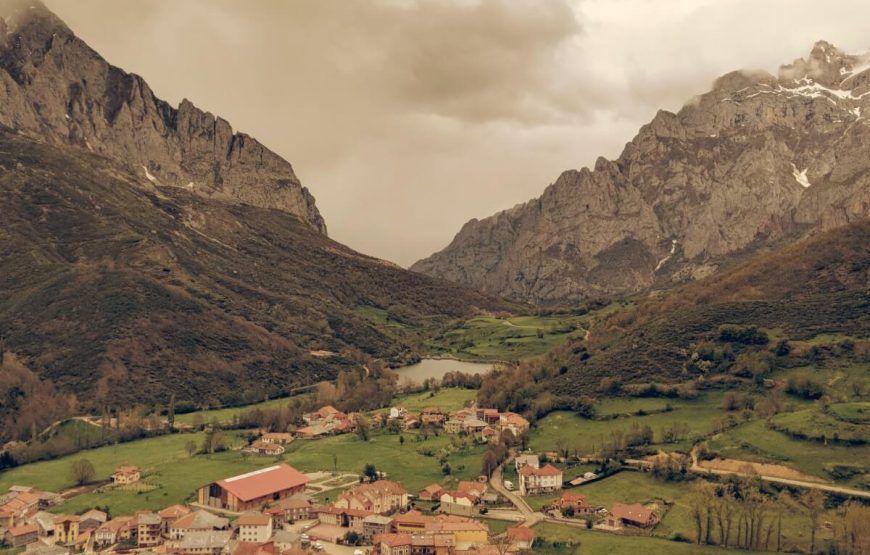
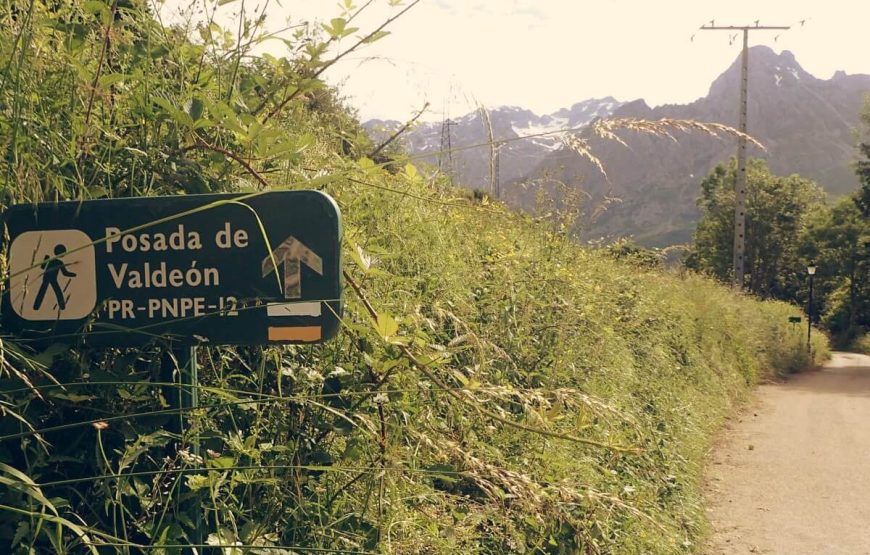
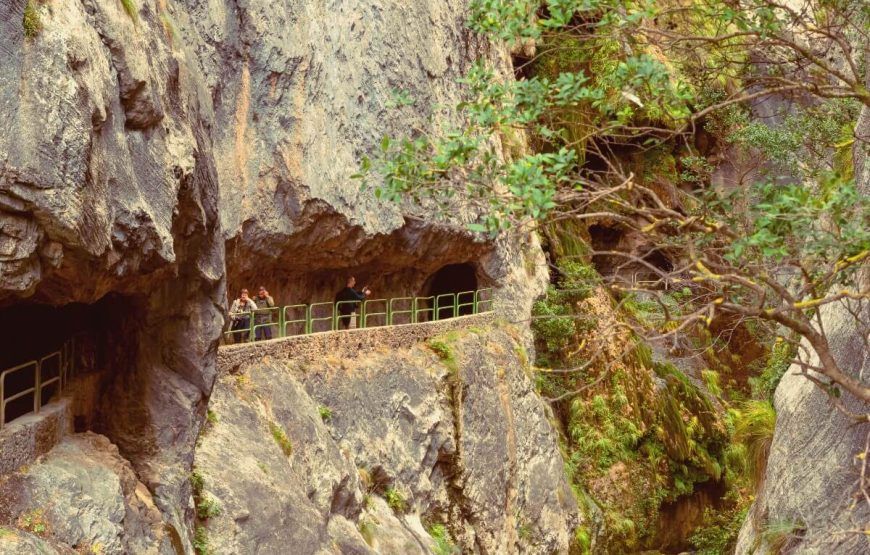
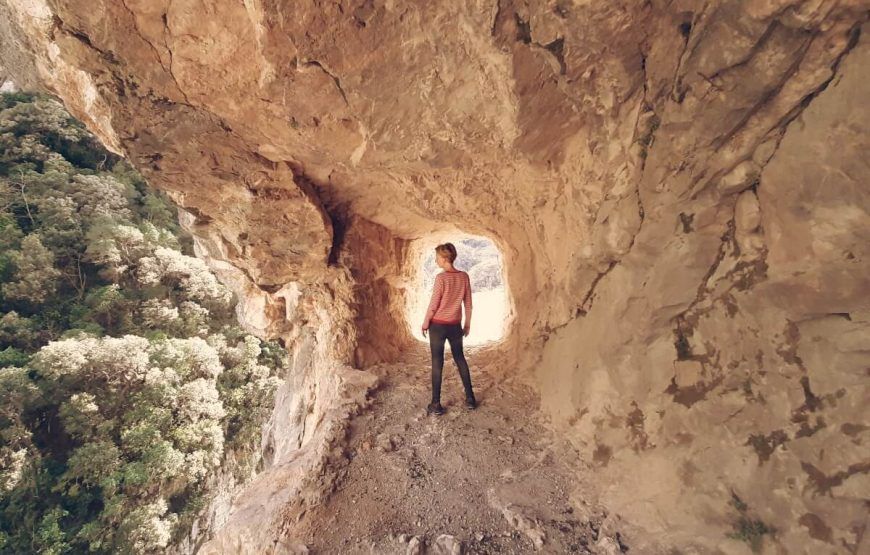
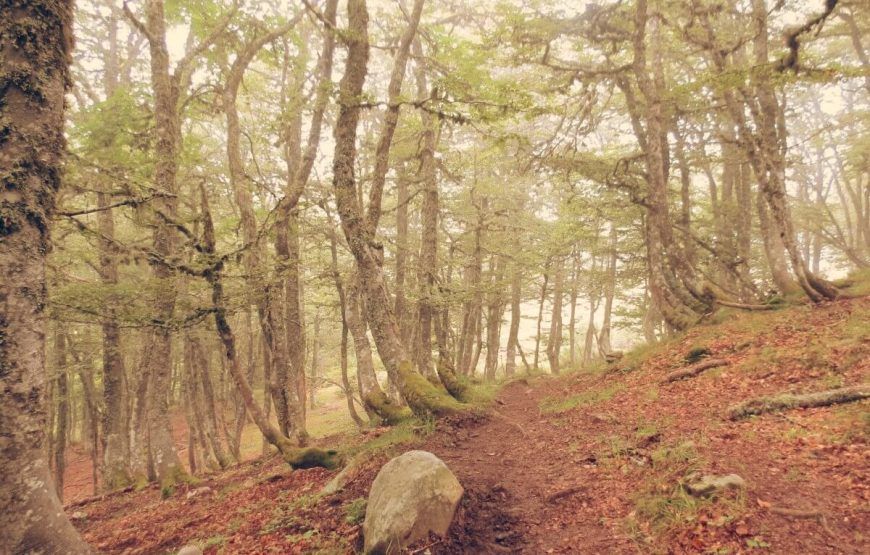
After breakfast you drive to Posada de Valdeón, the starting point for one of the most iconic walks in Spain. From the village you follow a path through beech forest and meadows towards Caín, passing the Tombo viewpoint and the Chorco de los Lobos along the way. From Caín you join the Ruta del Cares, walking through the gorge carved by the Cares River, past waterfalls, over stone bridges and through rock tunnels, all the way to Puente Bolín. You then return and from Cain you can take a local taxi back to Posada de Valdeón.
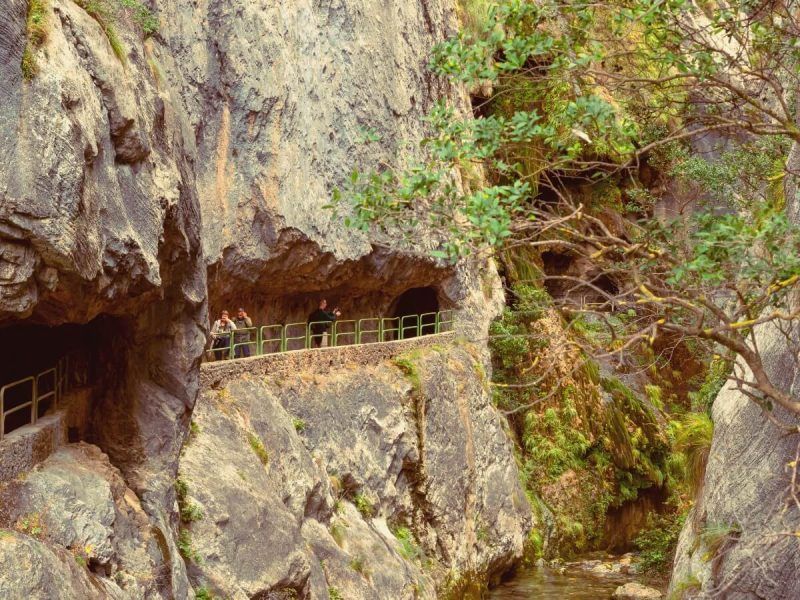
Today you drive from Posada de Valdeón to Soto de Sajambre, a beautiful mountain village at the foot of Peña Santa. From there you set off on foot, crossing a wooden bridge and climbing through a stunning beech forest until the trail opens up into the meadow of Majada de Vegabaño. Here you reach the Refugio Vegabaño, warmly run by Julián and Nuria, at 1,432 metres above sea level. You can choose to spend the night at the refuge for a true mountain experience, or return to a bed and breakfast in Soto de Sajambre or nearby Oseja de Sajambre.
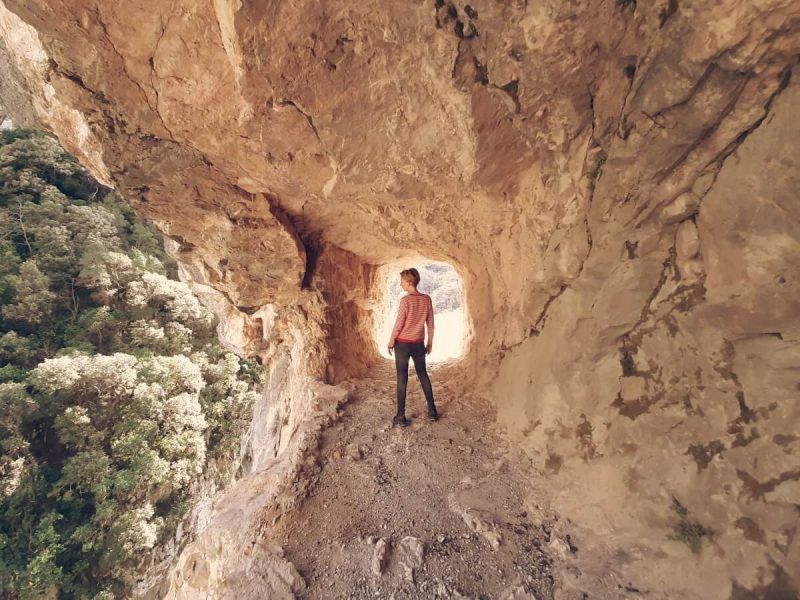
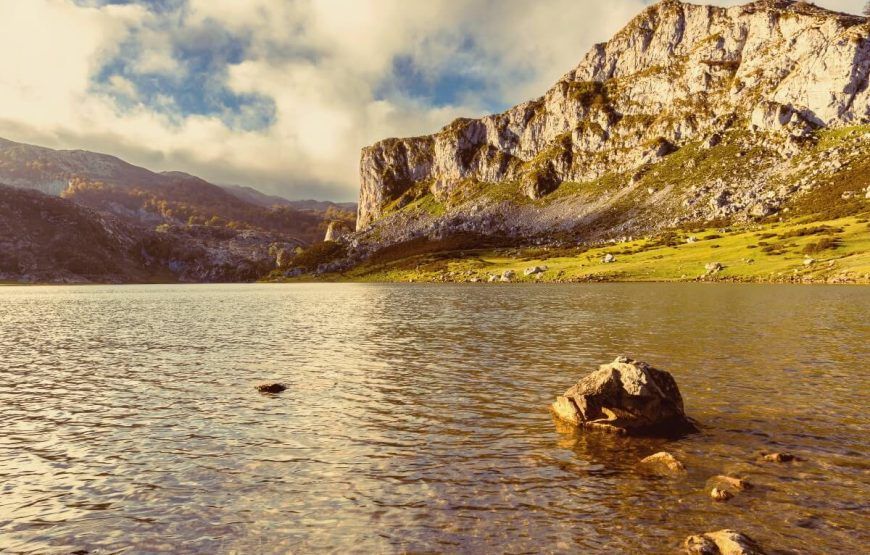
Today you drive to Cangas de Onís, the gateway to one of the most sacred and spectacular corners of the Picos. Between April and October, private vehicles are not permitted on the road to the lakes, so you board a bus from Cangas de Onís for a scenic ride into the mountains. The bus stops at the Santuario de Covadonga, a revered pilgrimage site dramatically set into the cliffside above a waterfall. From there you continue by bus up to the Lagos de Enol, two glacial lakes at 1,500 metres, completely surrounded by soaring peaks. You walk freely around the lakes and spend the night in Cangas de Onís.
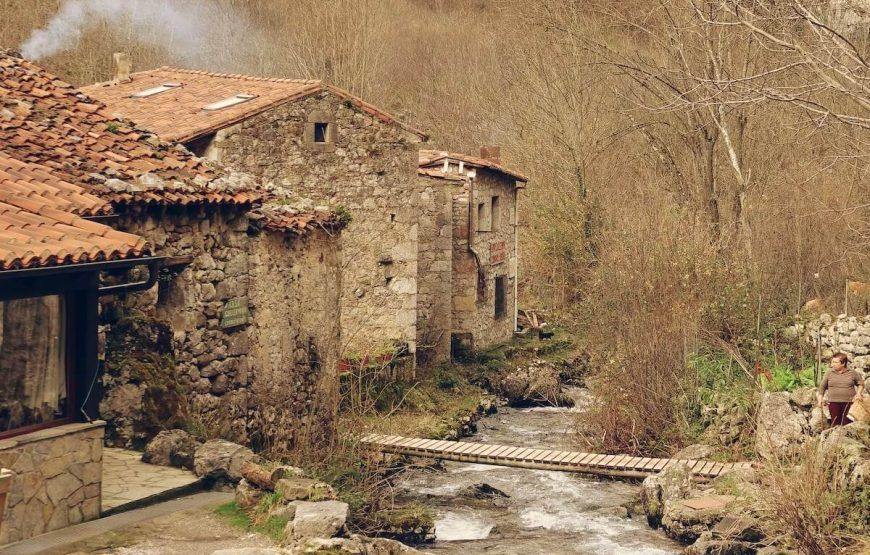
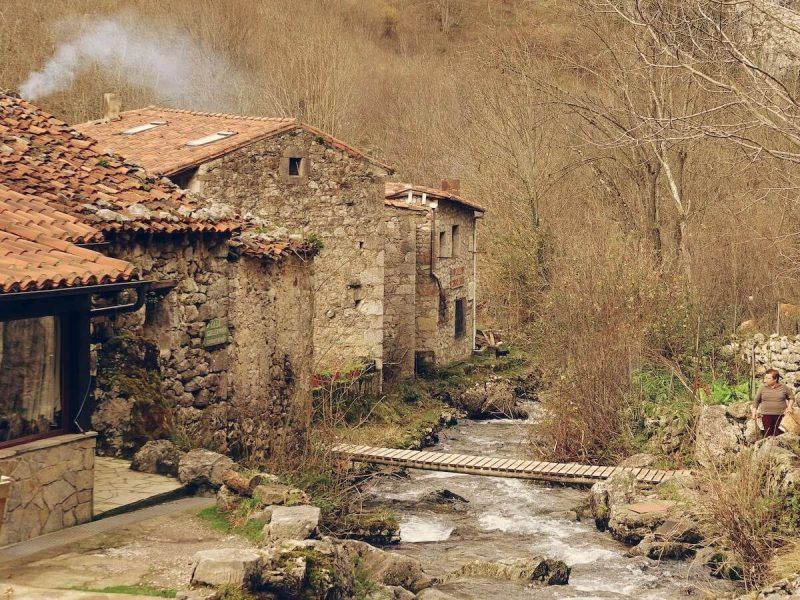
You drive to Poncebos, a small mountain hub at the southern end of the Cares route. From here you can board the Bulnes funicular, a cable train that climbs 400 metres through the mountain in just seven minutes, or you can enjoy the beautiful hike up. Bulnes has no road access and until 2001 its residents relied entirely on foot or horseback. Today it remains a place completely apart from the modern world, with stone houses, red rooftops and some of the best cheese in Asturias. From Bulnes de Arriba you walk to the Refugio La Terenosa, where the staff cook dinner for their guests. You can spend the night at the refuge or return to a bed and breakfast in Poncebos.
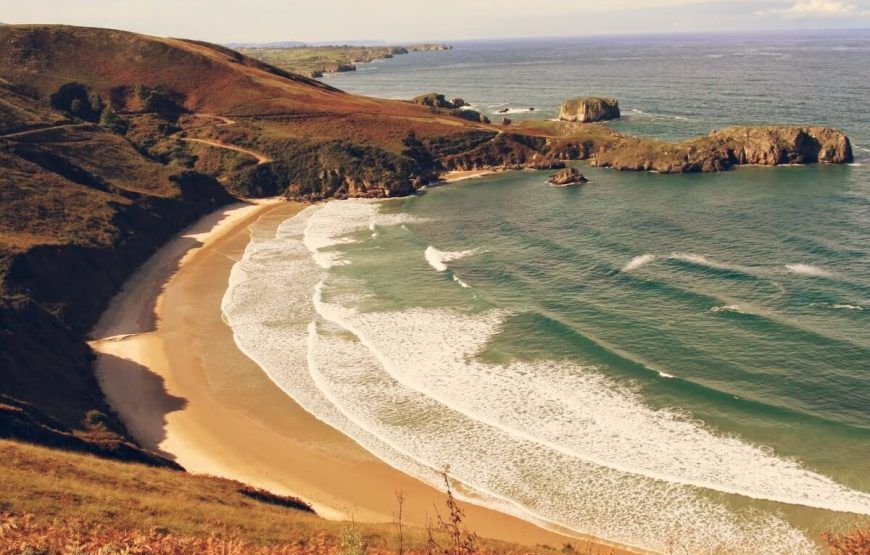
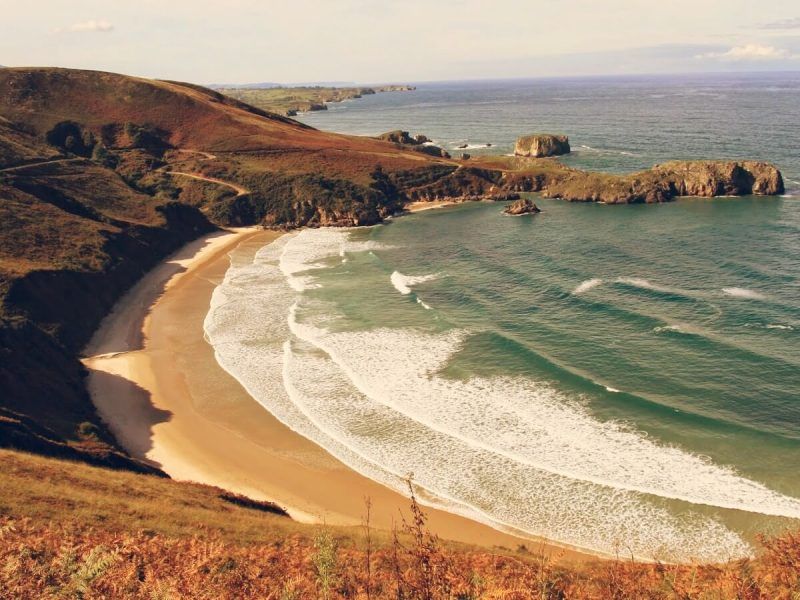
The mountains give way to the sea today. You drive from Poncebos towards Llanes, stopping at Playa de Torimbia along the way. This is one of the most beautiful beaches in northern Spain, a perfect shell-shaped curve of golden sand framed by green cliffs. The beach cannot be reached by car, so you park above and walk down, with views that open up gradually as you descend. There is a wonderful beach club open from April to September. You spend your last night in Llanes, with a well-earned Asturian dinner waiting for you.
After breakfast it is time to say goodbye to the Picos de Europa. The limestone peaks, the gorge of the Cares, the sacred lakes, the hidden village of Bulnes and that final afternoon on the beach, Picos de Europa has a way of staying with you long after you leave!
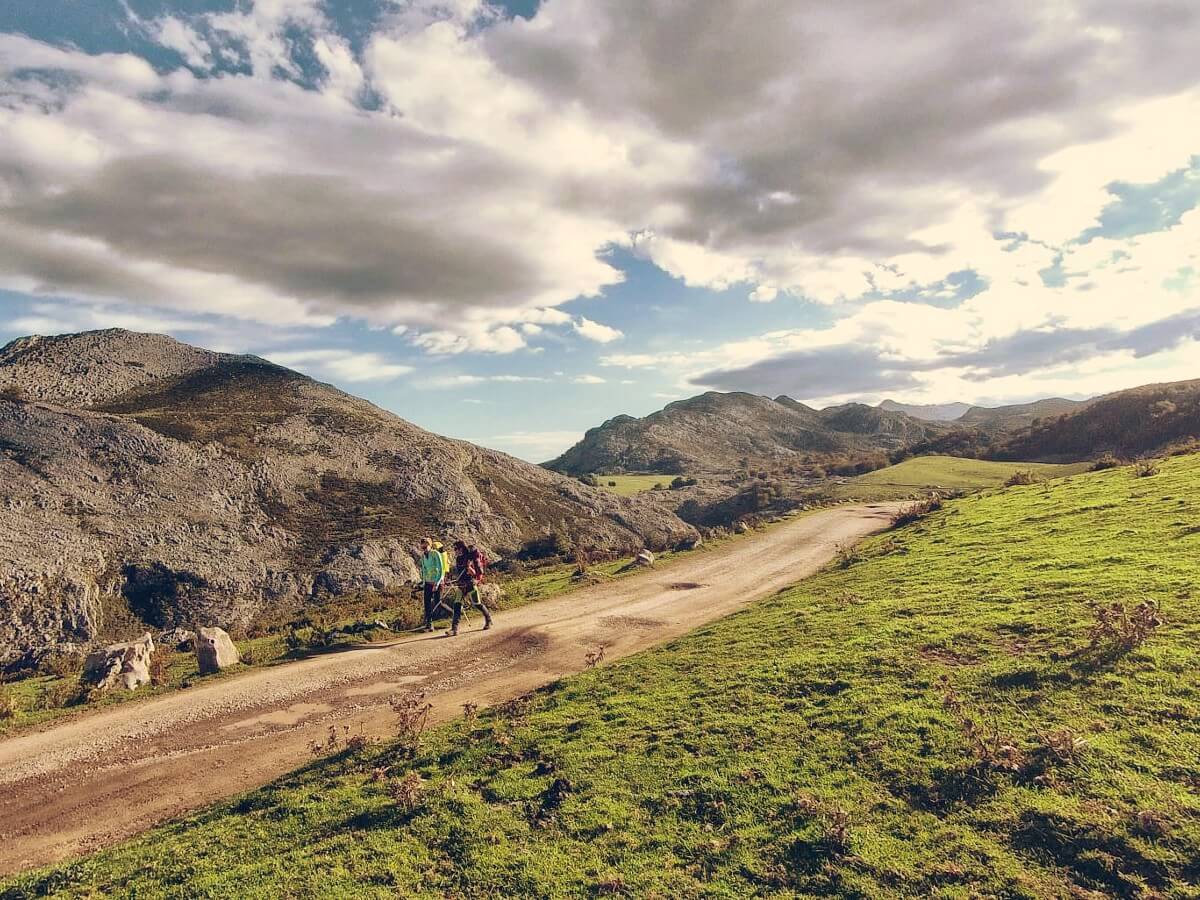
Your journey begins in Fuente Dé, a small village nestled at the foot of the Picos de Europa massif, famous for its glacial cirque. From here you take the cable car up 800 metres to the Mirador del Cable viewpoint at 1,850 metres above sea level, where the views across the Central Massif are extraordinary. The cable car runs almost year-round from 10:00 to 17:00, and tickets should be purchased well in advance. From the summit, you walk freely for a few hours through the high mountain landscape before taking the cable car back down to Fuente Dé, where you spend the night. There is easy parking in the village.
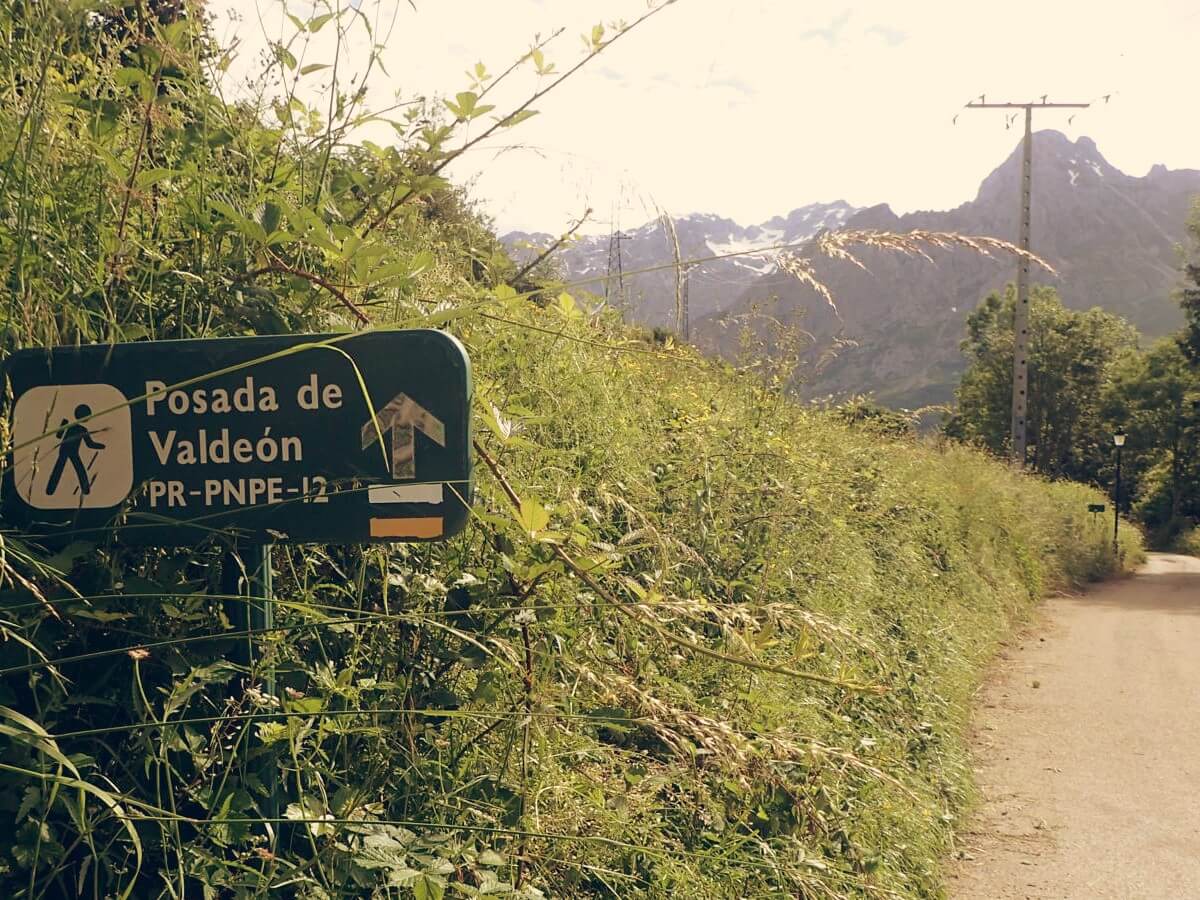
After breakfast you drive to Posada de Valdeón, the starting point for one of the most iconic walks in Spain. From the village you follow a path through beech forest and meadows towards Caín, passing the Tombo viewpoint and the Chorco de los Lobos along the way. From Caín you join the Ruta del Cares, walking through the gorge carved by the Cares River, past waterfalls, over stone bridges and through rock tunnels, all the way to Puente Bolín. You then return and from Cain you can take a local taxi back to Posada de Valdeón.
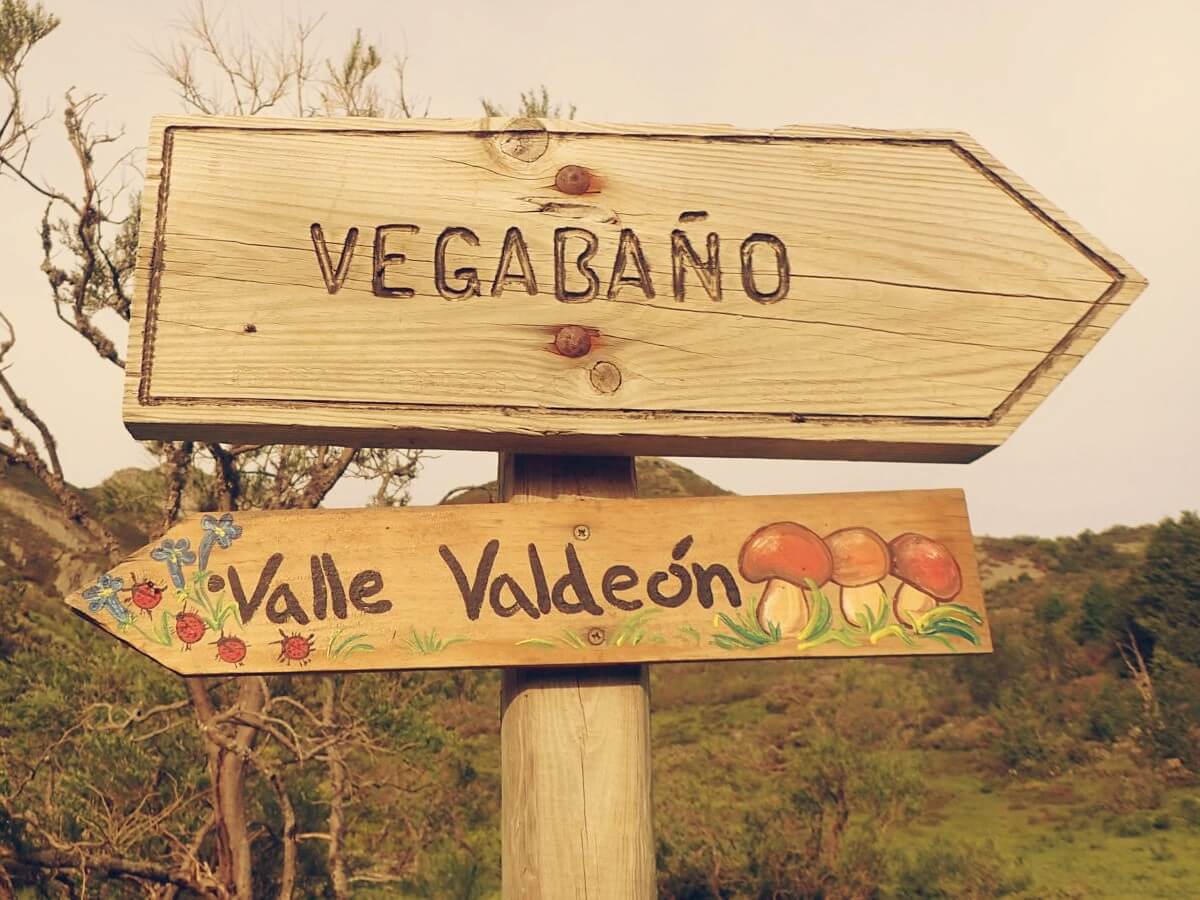
Today you drive from Posada de Valdeón to Soto de Sajambre, a beautiful mountain village at the foot of Peña Santa. From there you set off on foot, crossing a wooden bridge and climbing through a stunning beech forest until the trail opens up into the meadow of Majada de Vegabaño. Here you reach the Refugio Vegabaño, warmly run by Julián and Nuria, at 1,432 metres above sea level. You can choose to spend the night at the refuge for a true mountain experience, or return to a bed and breakfast in Soto de Sajambre or nearby Oseja de Sajambre.
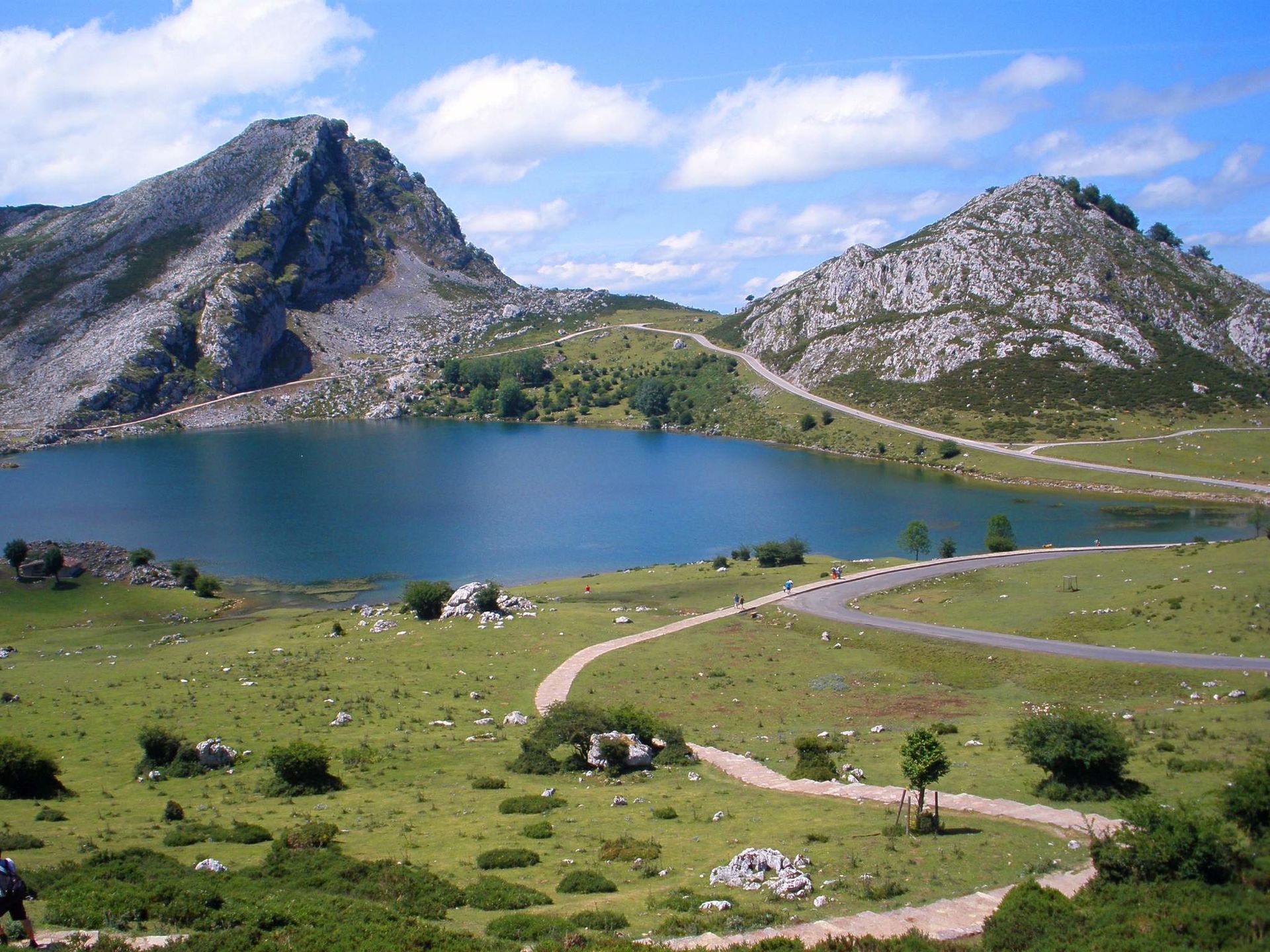
Today you drive to Cangas de Onís, the gateway to one of the most sacred and spectacular corners of the Picos. Between April and October, private vehicles are not permitted on the road to the lakes, so you board a bus from Cangas de Onís for a scenic ride into the mountains. The bus stops at the Santuario de Covadonga, a revered pilgrimage site dramatically set into the cliffside above a waterfall. From there you continue by bus up to the Lagos de Enol, two glacial lakes at 1,500 metres, completely surrounded by soaring peaks. You walk freely around the lakes and spend the night in Cangas de Onís.
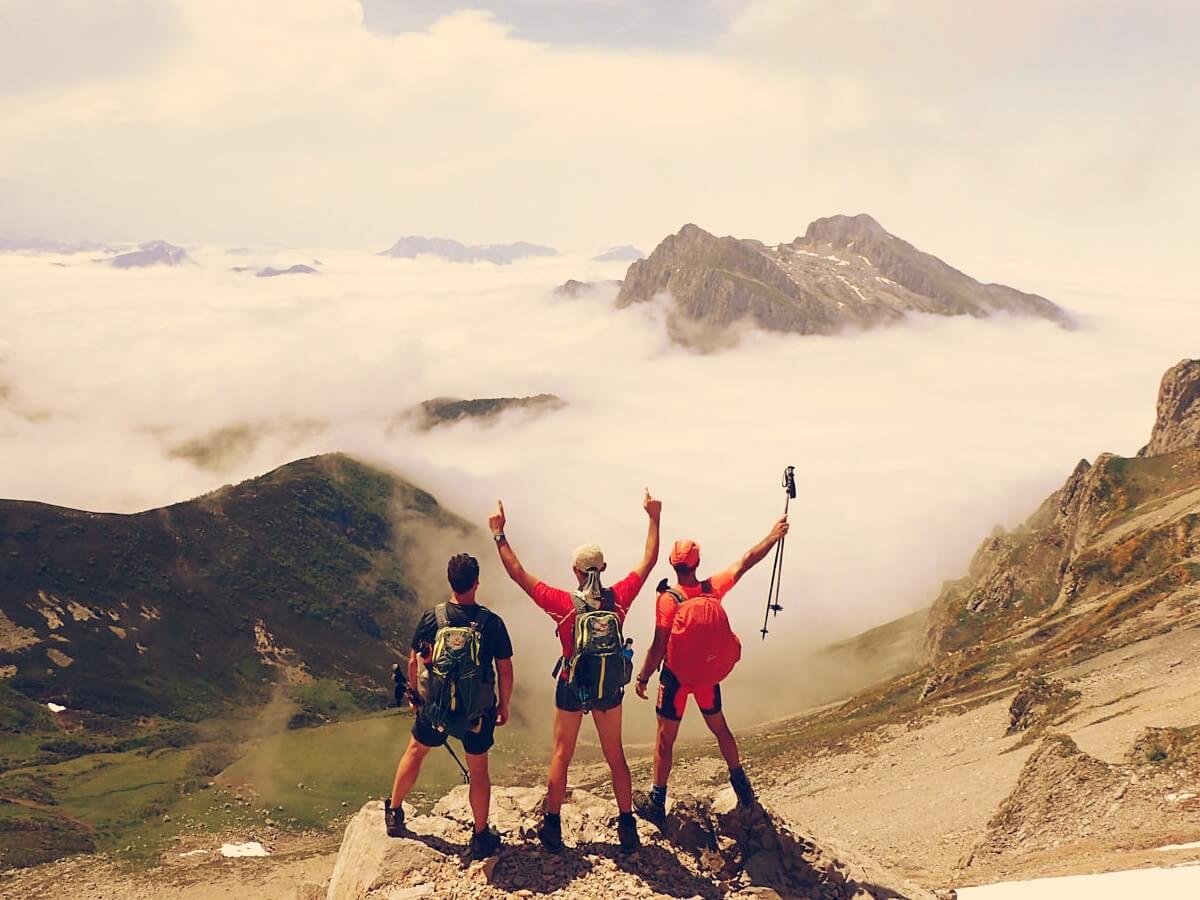
You drive to Poncebos, a small mountain hub at the southern end of the Cares route. From here you can board the Bulnes funicular, a cable train that climbs 400 metres through the mountain in just seven minutes, or you can enjoy the beautiful hike up. Bulnes has no road access and until 2001 its residents relied entirely on foot or horseback. Today it remains a place completely apart from the modern world, with stone houses, red rooftops and some of the best cheese in Asturias. From Bulnes de Arriba you walk to the Refugio La Terenosa, where the staff cook dinner for their guests. You can spend the night at the refuge or return to a bed and breakfast in Poncebos.
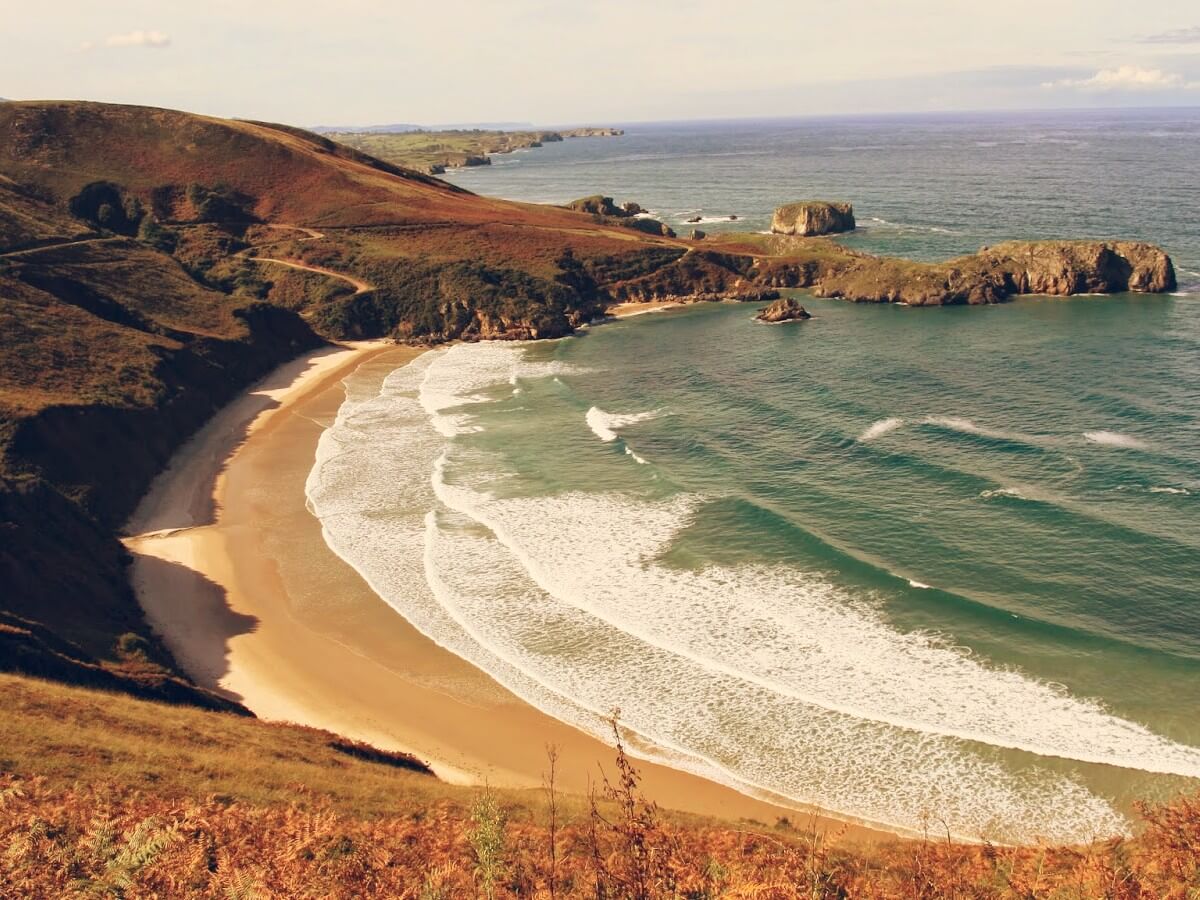
The mountains give way to the sea today. You drive from Poncebos towards Llanes, stopping at Playa de Torimbia along the way. This is one of the most beautiful beaches in northern Spain, a perfect shell-shaped curve of golden sand framed by green cliffs. The beach cannot be reached by car, so you park above and walk down, with views that open up gradually as you descend. There is a wonderful beach club open from April to September. You spend your last night in Llanes, with a well-earned Asturian dinner waiting for you.
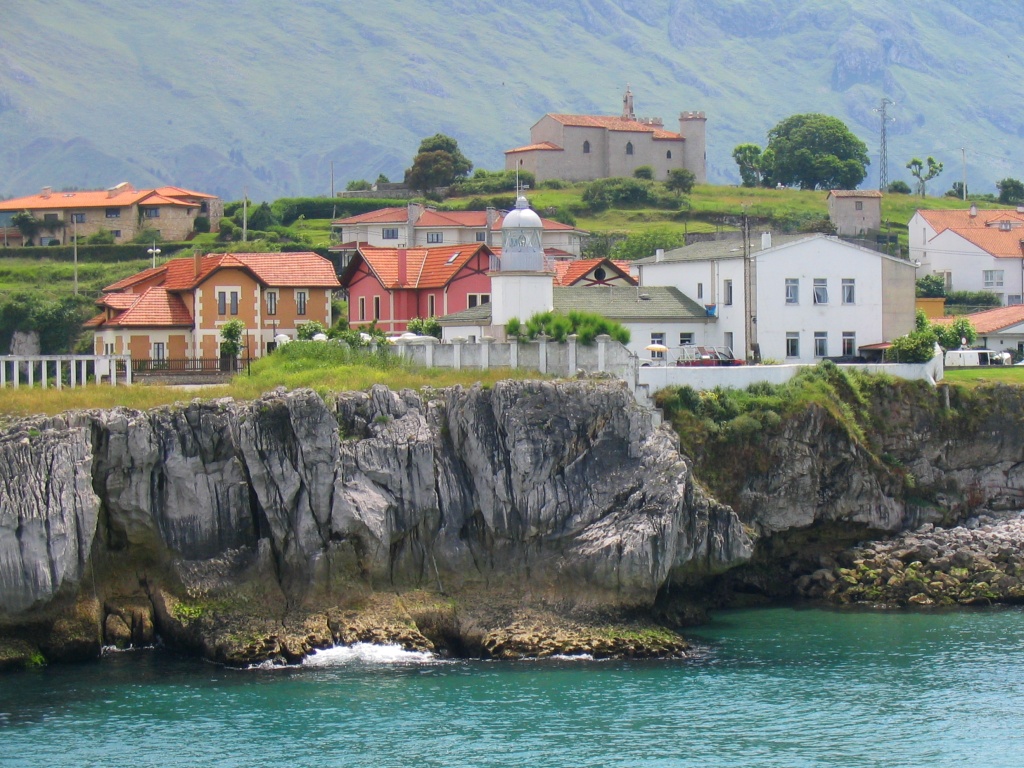
After breakfast it is time to say goodbye to the Picos de Europa. The limestone peaks, the gorge of the Cares, the sacred lakes, the hidden village of Bulnes and that final afternoon on the beach, Picos de Europa has a way of staying with you long after you leave!
This is a Level 1 trip, designed to be accessible to walkers without technical mountain experience. A reasonable base fitness is recommended, but no prior mountain experience is needed.
On this trip you carry your own backpack between stops. We recommend packing light: a comfortable daypack with enough water, snacks, sunscreen, and a rain jacket for the day. Good walking shoes and warm layers are essential, but don't forget something lightweight and a pair of flip flops for the evenings!
You will stay in a mix of comfortable hotels, guesthouses, and rural casa rurales, all chosen for their quality, location, and local character. On certain nights, there is also the option to sleep at a mountain refuge, which adds a genuinely immersive dimension to the experience.
Staying in a mountain refuge is one of the genuine highlights of this trip. We include Refugio Vegabaño and Refugio La Terenosa specifically to give you an immersive high-mountain experience: rustic, cosy, and completely removed from everyday life.
The facilities are simple and shared, and there is no hot water. Bring a travel towel and a sleeping bag or liner for maximum comfort, as blankets are provided but a liner makes a real difference. The staff take great pride in serving hearty meals and drinks at the end of a long day in the mountains.
What you trade in comfort you more than gain back in the atmosphere. The camaraderie around the table in the evening, the silence of the peaks at night, and the views from the doorway at sunrise are the kind of things that stay with you long after the trip is over. For those who prefer a hotel, this option is available on both nights.
Breakfast and dinner is included every day except in Llanes where you can book a nice restaurant or have dinner in the hotel. The region is known for its exceptional food, including Asturian cider, fabada stew, and Cabrales cheese.
This itinerary is designed as a journey from the heart of the mountains to the sea, beginning in Fuente Dé in the Liébana Valley and concluding in the coastal town of Llanes in Asturias.
Because of the remote nature of the Picos de Europa, a car is essential for this trip. You can use your own vehicle or arrange a rental from one of the nearby regional airports. The closest options are Santander (SDR), the nearest airport to the start point; Asturias/Oviedo (OVD), ideal if you want to be closer to the finish in Llanes; Bilbao (BIO), which offers the most international flight connections; and León (LEN), with connections to Barcelona.
We recommend April to October, when mountain conditions are suitable, the cable car and seasonal bus services to the Lagos de Enol are running, and the landscapes are at their most vivid.
The cable car at Fuente Dé and the bus to the Lagos de Enol are not included in the trip price. Both are easy to purchase locally, and we will provide all the practical details in your travel document.
Good walking shoes, a daypack, sun protection, refillable water bottles, and layers for changeable mountain weather. A rain jacket is essential. Walking poles are optional but useful on descent days. The mountains can be significantly cooler than the coast even in summer, so warm layers are always a good idea.
No specific training is required, but it helps to be comfortable walking for several hours on uneven terrain. We recommend some preparation walks in the weeks before your trip, ideally on hilly ground.
You can reach us 24/7 on our emergency line, and we will advise and support you in case of any unexpected situation, whether practical, medical, or logistical.

Member Since 2019