

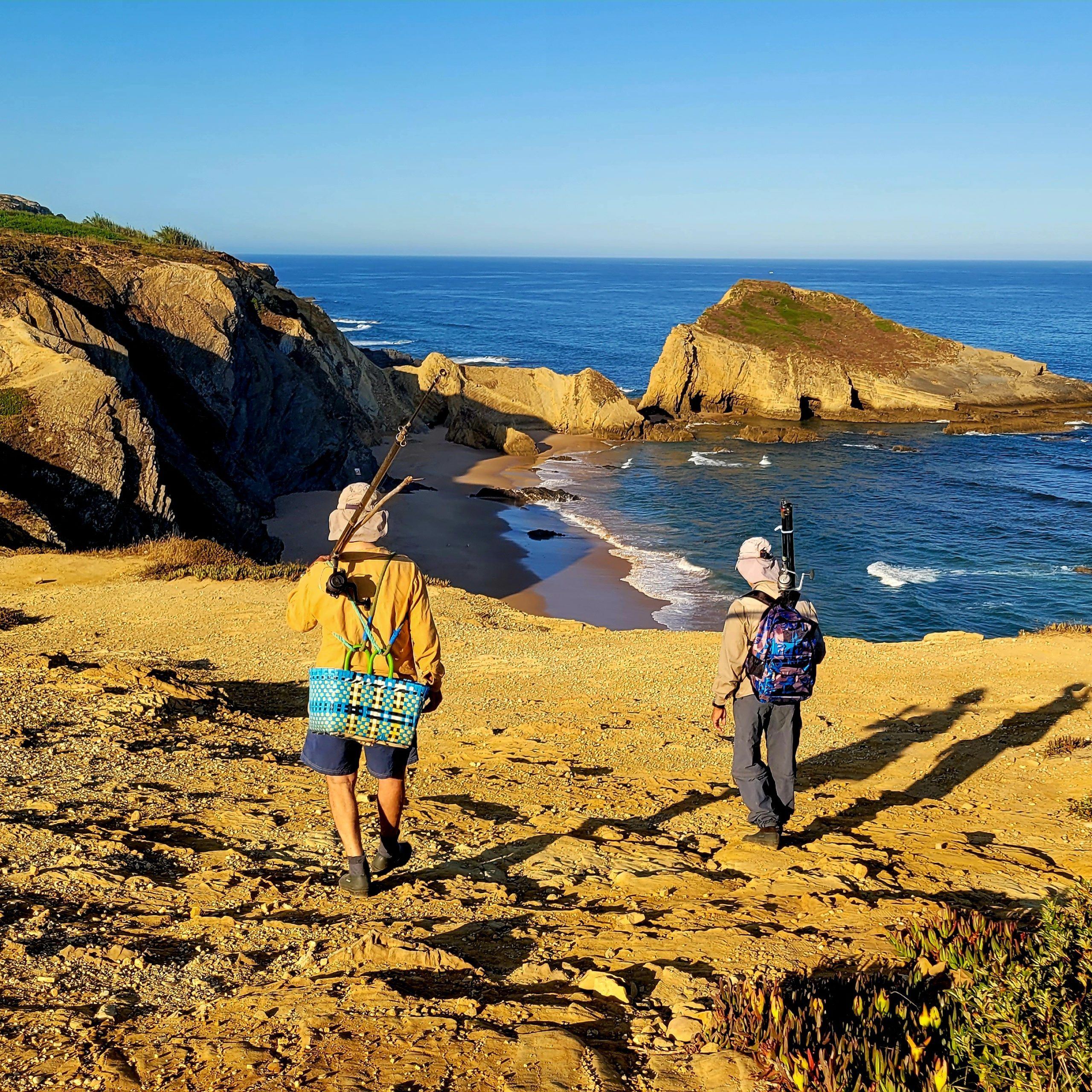
The Fisherman’s Trail is one of Europe’s most spectacular coastal hiking routes, attracting walkers from around the world who want to discover Portugal’s wild Atlantic coastline on foot.
Whether you’re planning the complete route or just starting your research, this Fisherman’s Trail guide brings together everything you need to prepare your adventure. From understanding the route and its stages to choosing the best season, assessing the difficulty and organising your logistics, you’ll find all the essential information in one place.
If you’re considering hiking the Fisherman’s Trail, good planning will make your experience safer, more enjoyable and far less stressful. At WAW.travel, we offer both an 8-day highlights version and the full 15-day Fisherman’s Trail experience. This guide explains what to expect before you set off and helps you decide which type of itinerary best suits your available time and walking experience.
What Is the Fisherman’s Trail?
The Fisherman’s Trail (Trilho dos Pescadores) is one of the routes that form part of the Rota Vicentina, a long-distance hiking network located in southwestern Portugal. While the Historical Way explores inland landscapes and rural villages, the Fisherman’s Trail follows the Atlantic coastline almost continuously, offering an entirely different hiking experience.
Originally, many sections of the route were used by local fishermen to reach isolated fishing spots along the cliffs. Over time these paths were preserved and connected to create what is now considered one of the finest coastal hiking trails in Europe.
The trail stretches from São Torpes, near Sines, to Lagos, in the Algarve, covering more than 220 kilometres depending on the chosen variant. Along the way, hikers experience an extraordinary diversity of landscapes, from high cliffs overlooking the Atlantic Ocean to secluded beaches, estuaries, dunes and charming whitewashed villages.
Unlike many long-distance trails, the Fisherman’s Trail does not require technical mountaineering skills. However, the combination of sandy terrain, exposed coastal sections and daily walking distances makes it a rewarding challenge that requires good preparation.
Today, the route attracts walkers from all over the world thanks to its outstanding natural beauty, well-maintained waymarking and the opportunity to experience one of Portugal’s most authentic regions at a slower pace.

Why Hike the Fisherman’s Trail?
Few long-distance walks in Europe combine such dramatic coastal scenery with the tranquillity found along the Fisherman’s Trail. Rather than crossing busy tourist areas, the route passes through protected landscapes where nature remains largely untouched.
Throughout the trail you’ll discover towering cliffs sculpted by the Atlantic Ocean, hidden coves, endless sandy beaches and small whitewashed villages where local traditions are still very much alive. Every day offers constantly changing landscapes while maintaining the unmistakable character of Portugal’s wild southwest coast.
Beyond its scenery, the trail appeals to walkers looking for a rewarding hiking experience without requiring technical mountaineering skills. It combines physical challenge with accessible infrastructure, making it suitable for many experienced walkers who enjoy multi-day hiking holidays.
The route also provides an opportunity to experience Portuguese hospitality, fresh seafood, regional cuisine and peaceful overnight stays in coastal villages that have welcomed travellers for generations.
Fisherman’s Trail Quick Facts
Before hiking the Fisherman’s Trail, it’s useful to understand some of the route’s main characteristics at a glance.
| Feature | Information |
|---|---|
| Country | Portugal |
| Trail network | Rota Vicentina |
| Region | Alentejo & Algarve |
| Trail type | Long-distance coastal hiking trail |
| Approximate length | More than 220 km |
| Typical duration | Between one and two weeks, depending on the chosen itinerary |
| Difficulty | Moderate |
| Terrain | Coastal paths, sandy trails, cliff-top tracks and rural roads |
| Waymarking | Excellent throughout most of the route |
| Best seasons | Spring and autumn |
| Suitable for | Experienced walkers and active travellers with a good level of fitness |
Although these figures provide a useful overview, every hiking experience is different. Factors such as walking pace, weather conditions, daily distances and the amount of time available all influence how you choose to experience the Fisherman’s Trail.
For this reason, one of the most important parts of planning is deciding which type of hiking experience best matches your interests and available time. Later in this guide, we’ll explain the different ways to enjoy the trail and help you understand which option may suit you best.
How Difficult Is Hiking the Fisherman’s Trail?
One of the questions most people ask before hiking the Fisherman’s Trail is whether the route is difficult. The answer depends less on elevation than on the type of terrain you’ll encounter throughout the walk.
Unlike mountain trails, the Fisherman’s Trail rarely involves long or steep climbs. Instead, the main challenge comes from the constantly changing surface underfoot. Large sections follow sandy coastal paths where every step requires more effort than walking on compact ground. Over several consecutive days, this extra effort becomes one of the defining characteristics of the route.
The Atlantic climate also plays an important role. Depending on the season, hikers may experience strong coastal winds, intense sunshine and long exposed sections with very little shade. These factors can make relatively moderate distances feel significantly more demanding.
Is the Fisherman's Trail suitable for beginners?
Yes, provided you approach it with realistic expectations.
Previous experience of multi-day hiking is helpful, but it is not essential. Walkers with a good general level of fitness who regularly enjoy long walks can successfully complete the route after some basic preparation.
If this is your first long-distance hike, preparing with several practice walks before travelling will help your body adapt to consecutive days of walking.
What makes the trail physically demanding?
The difficulty comes from the combination of several factors rather than one single challenge:
- Walking on soft sand for extended periods.
- Daily distances that often exceed 15 km.
- Exposure to sun and coastal winds.
- Limited shade during warmer months.
- Several consecutive days of hiking.
These elements create a rewarding but physically engaging experience that differs from many other European walking routes.
Do you need special hiking experience?
No technical skills are required.
There are no climbing sections, exposed ridges or equipment such as ropes or helmets. However, good hiking boots or trail shoes, comfortable clothing and sensible daily planning make a significant difference.
The Fisherman’s Trail rewards consistency rather than speed. Maintaining a comfortable pace, taking regular breaks and staying hydrated will often contribute more to a successful experience than trying to cover each day as quickly as possible.
Best time to walk the Fishermen’s Trail stages
The Fishermen’s Trail stages in Portugal are beautiful year-round, but conditions vary by season:
- Spring (March – May):
- Flowers are in bloom, cliffs are green and colorful.
- Temperatures are mild (15–25 °C).
- Not too crowded with tourists.
-
Autumn (September – October):
- Sea water still warm enough for swimming.
- Pleasant temperatures and beautiful landscapes.
- Quieter than summer.
-
Summer (June – August):
- Very hot (sometimes >30 °C), though sea breezes bring relief.
- Long sandy stages can feel uncomfortable.
- Popular with tourists → fewer hikers, so you may have the trail to yourself.
-
Winter (November – February):
- Chance of rain and strong winds.
- Trails can be slippery or muddy.
- Still possible, but less stable weather.
Summary: The very best time to walk the Fishermen’s Trail stages is March–May or September–October.
One of the greatest strengths of the Fisherman’s Trail is its excellent waymarking.
Throughout most of the route, hikers follow the distinctive blue and green painted stripes used across the Rota Vicentina network. These markers are placed regularly along the trail and make navigation straightforward, even for walkers with limited experience of long-distance hiking.
Nevertheless, carrying an offline map or GPS application is always advisable. Mobile coverage is generally good in most areas, but signal strength can occasionally be weaker in more remote coastal sections.
Before setting off each morning, it’s also worth checking the day’s route and weather forecast. Although the trail itself is easy to follow, unexpected weather conditions can sometimes affect walking times.
Practical Tips for the Fishermen’s Trail stages
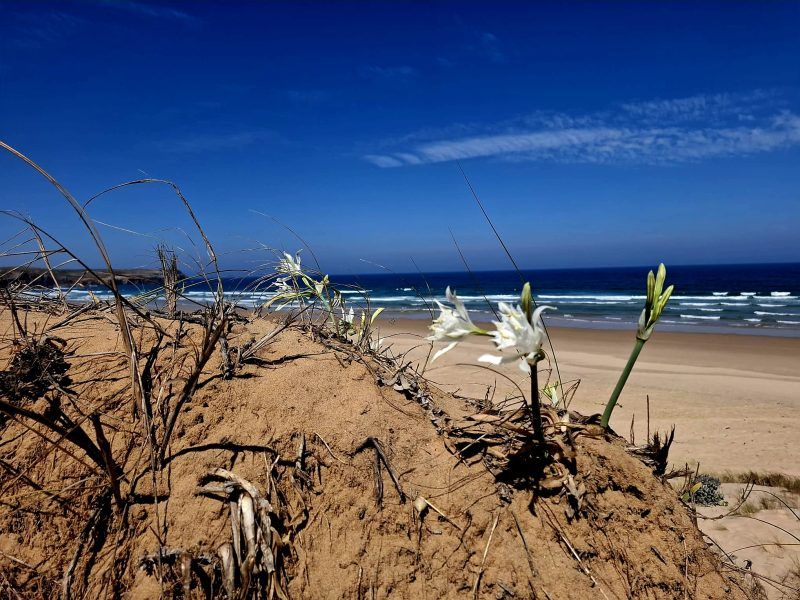
The Fishermen’s Trail is one of the most beautiful coastal hikes in Portugal, but it also requires good preparation. Since the route runs mainly along cliffs and sandy paths, it’s wise to start early: this way you avoid the hottest hours of the day and enjoy more peace on the trails. Always carry enough water — at least two liters per person — and snacks, as facilities along the way are scarce. Lightweight but sturdy shoes with good grip are essential, as are sunscreen, a cap or hat, and a wind jacket, since both sun and wind can be intense here.
The route is clearly marked with blue and green stripes. And don’t forget: stay on the paths, as the vegetation along the cliffs is fragile.
The stages vary in difficulty. The stretch from Porto Covo to Vila Nova de Milfontes (20 km) is immediately the longest and toughest due to the many sandy sections — hiking poles provide extra support here. The second stage to Almograve (15 km) is shorter and more varied: you can cross the Mira River by ferry or take a detour across the bridge.
Next comes the hike to Zambujeira do Mar (22 km), where dramatic cliffs and small fishing villages set the scene. There are no facilities along the way, so bring everything you need. The final classic stage runs from Zambujeira to Odeceixe (18 km). The highlight is the lighthouse at Cabo Sardão, but expect strong headwinds. The arrival in Odeceixe, overlooking the river and the beach, is a beautiful reward.
Accommodation options include guesthouses, hostels, or small hotels along the route. Since the trail is becoming increasingly popular, booking in advance is highly recommended, especially in spring and autumn. On all Fisherman’s Trail stages, luggage transport can be arranged, meaning you only need to carry a daypack yourself.
Self-Guided or Organized?
The Fishermen’s Trail stages can be walked either independently or as part of an organized trip, and both options have their appeal. Choosing to organize it yourself means full freedom: you decide your pace, when to take breaks, and whether to skip a section with a taxi or bus. It’s usually cheaper, as you only pay for accommodation and possibly luggage transport. It also often creates a more authentic experience, with more contact with locals in the villages along the way.
On the other hand, you’ll need to arrange accommodation yourself — often months in advance — and you’re responsible for navigation and your own planning. Without luggage transport, you’ll have to carry everything on your back, which makes the stages more demanding.
An organized trip, with or without a guide, takes many of these worries off your shoulders. Accommodations, transfers, and often luggage transport are arranged in advance, so you can fully focus on walking. You’ll also receive tips along the way, such as where to eat well.
Some companies even provide an emergency number or on-route support, and in a group setting you share the experience with other adventurers, which adds to the fun. The downside is that an organized trip is more expensive than planning it yourself, and you have less flexibility: you follow the set program and have less freedom to walk at your own pace or take a rest day.
In short: those who value freedom and adventure are better off organizing the Fishermen’s Trail stages themselves, while walkers who seek comfort, security, and peace of mind may benefit more from booking an organized hike.
Planning Your Fisherman’s Trail Adventure
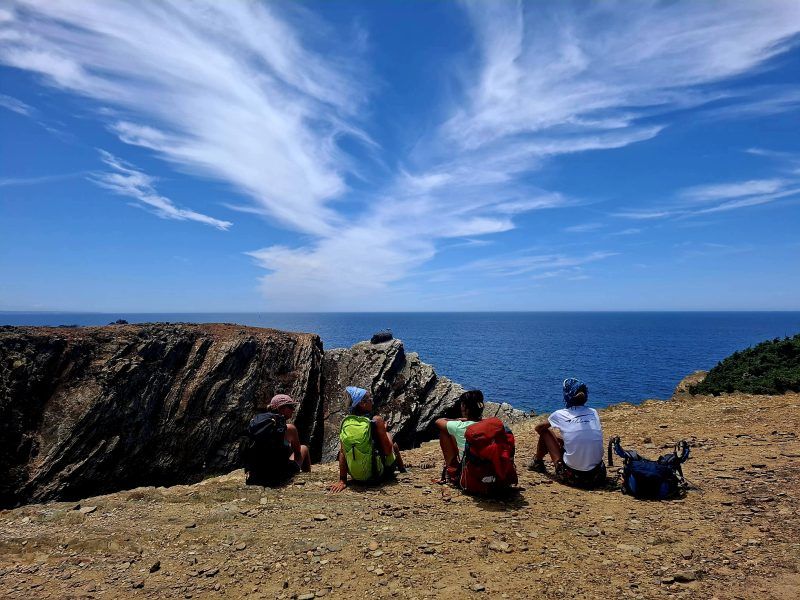
Good preparation is one of the keys to enjoying a successful Fisherman’s Trail experience. While the route is well established and relatively easy to follow, planning ahead allows you to focus on the scenery instead of worrying about logistics along the way.
Before hiking the Fisherman’s Trail, it’s worth considering how much time you have available, the season you plan to travel, your preferred walking pace and the level of comfort you’re looking for. These factors will help shape your overall experience and make it easier to choose the option that best suits your needs.
How many days do you need?
There is no single answer to this question.
Some walkers choose to experience the complete trail over a longer holiday, while others focus on shorter sections that fit into a one-week break. If you’re looking for a fully organised itinerary covering the entire route, take a look at our 14-Day Fisherman’s Trail Portugal. The right choice depends on your available time, walking experience and how relaxed you want your daily schedule to be.
Rather than trying to cover as much distance as possible, many experienced hikers recommend leaving enough time to enjoy the villages, beaches and viewpoints that make the Fisherman’s Trail so memorable.
How do you get to the Fisherman's Trail?
The trail is easily accessible from several Portuguese cities.
Depending on the section you plan to hike, the most convenient airports are usually Lisbon and Faro, both of which offer excellent international connections throughout the year.
From there, public transport services such as buses and trains provide access to many of the towns located near the route. Some villages are better connected than others, so journey times can vary considerably.
For walkers travelling independently, checking transport schedules before arriving in Portugal is recommended, particularly outside the peak tourist season.
Where should you stay?
Accommodation is available in most of the villages connected by the Fisherman’s Trail, ranging from small guesthouses and rural hotels to boutique accommodation and family-run B&Bs.
Because the route has become increasingly popular in recent years, availability can be limited during spring and autumn. Booking accommodation in advance is therefore highly recommended, especially if you’re travelling during the busiest hiking months.
Choosing accommodation within walking distance of the trail also helps minimise unnecessary transfers and allows you to start each day more comfortably.
How much does hiking the Fisherman's Trail cost?
One of the reasons why so many walkers choose Portugal is its excellent value compared with many other European hiking destinations.
The overall cost of hiking the Fisherman’s Trail depends on several factors, including accommodation, meals, transport and whether you arrange everything independently or choose a pre-planned walking holiday such as our 14-Day Fisherman’s Trail Portugal or a shorter 8-Day Fisherman’s Trail Portugal experience.
In general, daily expenses remain relatively reasonable, particularly when compared with similar long-distance coastal routes elsewhere in Europe.
Can you hike with only a daypack?
Yes.
Many hikers prefer carrying only the essentials needed during the day, making the walk considerably more comfortable, particularly on sandy sections where every extra kilogram becomes noticeable.
Luggage transfer services are available along much of the route for travellers who prefer not to carry larger backpacks between overnight stops.
Whether you choose to carry everything yourself or arrange luggage transport largely depends on your personal preferences, previous hiking experience and the style of holiday you’re looking for. If you prefer not to worry about logistics, our organised Fisherman’s Trail Portugal walking holidays include everything you need for a hassle-free experience.
Which Fisherman’s Trail Experience Is Right for You?
The Fisherman’s Trail can be enjoyed in different ways depending on how much time you have available and the type of holiday you’re looking for.
Rather than trying to fit every traveller into the same itinerary, it’s worth considering which experience best matches your expectations. Whether you’re looking for the complete adventure or a shorter introduction to Portugal’s spectacular coastline, you’ll find an itinerary that suits your available time and walking goals.
Complete Fisherman’s Trail Experience
Walking the complete route allows you to experience the trail from beginning to end, discovering the changing landscapes, coastal villages and natural diversity that make this one of Portugal’s most rewarding long-distance hikes.
This option is particularly suitable for walkers who have more time available and want to immerse themselves fully in the experience.
If you’re considering completing the entire route, explore our 14-Day Fisherman’s Trail Portugal, where you’ll find the full itinerary, accommodation details, included services and everything you need to organise your walking holiday with confidence.
Explore our Complete Fisherman’s Trail Walking Holiday →
Fisherman’s Trail Highlights
Not everyone has two weeks available for a walking holiday.
A shorter itinerary allows you to experience many of the route’s most iconic landscapes within a more limited timeframe while still enjoying the unique atmosphere of Portugal’s Atlantic coast.
This option is often ideal for first-time visitors, travellers combining hiking with other destinations or anyone looking for a shorter active holiday.
If you’d like to experience the highlights of the route without walking the entire trail, discover our 8-Day Fisherman’s Trail Portugal, featuring some of the most spectacular sections of Portugal’s Atlantic coastline.
Discover our Fisherman’s Trail Highlights →
Start Planning Your Fisherman’s Trail Adventure
Whether you’re looking for an unforgettable long-distance hike or simply dreaming about exploring Portugal’s spectacular Atlantic coastline, the Fisherman’s Trail offers an experience unlike any other.
From dramatic cliffs and peaceful fishing villages to endless ocean views and protected natural landscapes, every part of the route invites you to slow down and experience Portugal at a different pace.
We hope this Fisherman’s Trail guide has helped you understand what makes the route so unique and what to consider before setting off.
If you’re ready to take the next step, browse our collection of Fisherman’s Trail Portugal walking holidays to compare the available itineraries and choose the experience that best matches your available time and travel style.
Whether you decide on the complete 14-Day Fisherman’s Trail Portugal or prefer the shorter 8-Day Fisherman’s Trail Portugal, you’ll find carefully designed self-guided walking holidays that allow you to enjoy one of Europe’s finest coastal trails with complete peace of mind.

Comment (0)